

Periodic limb movement disorder (PLMD) causes repetitive jerks or kicks of the legs, and sometimes the arms, during sleep. The movements come in rhythmic sequences, often every 5 to 90 seconds, and they can fragment your sleep without waking you fully. You usually do not feel them. A bed partner often notices. Doctors diagnose PLMD with an overnight sleep study that counts more than 15 movements per hour in adults, plus real sleep problems or daytime tiredness that nothing else explains. PLMD is not the same as restless legs syndrome (RLS), which causes an urge to move your legs while awake. Checking iron levels and reviewing medications are common first steps. This is educational information, not medical advice.
Short answer (40-60 words): PLMD means repetitive leg or arm jerks during sleep that disturb sleep or cause daytime tiredness. A sleep study confirms it with more than 15 movements per hour in adults. It differs from restless legs, which causes an urge to move while awake. Doctors check iron levels and medications, and they rule out other causes first.
What Is PLMD?
During PLMD, your legs, and sometimes your arms, move in repeating patterns while you sleep. A typical movement involves the big toe extending and the ankle, knee, or hip flexing. Each movement lasts a fraction of a second to a few seconds, and they recur in series. Many sleep specialists count them with sensors on the shins. The American Academy of Sleep Medicine (AASM) scoring rules call a series of four or more movements, spaced 5 to 90 seconds apart, a periodic limb movement series.
You may not notice them. Some people sleep poorly or feel unrefreshed and never know why. A partner may report kicking.
PLMD vs. Restless Legs Syndrome
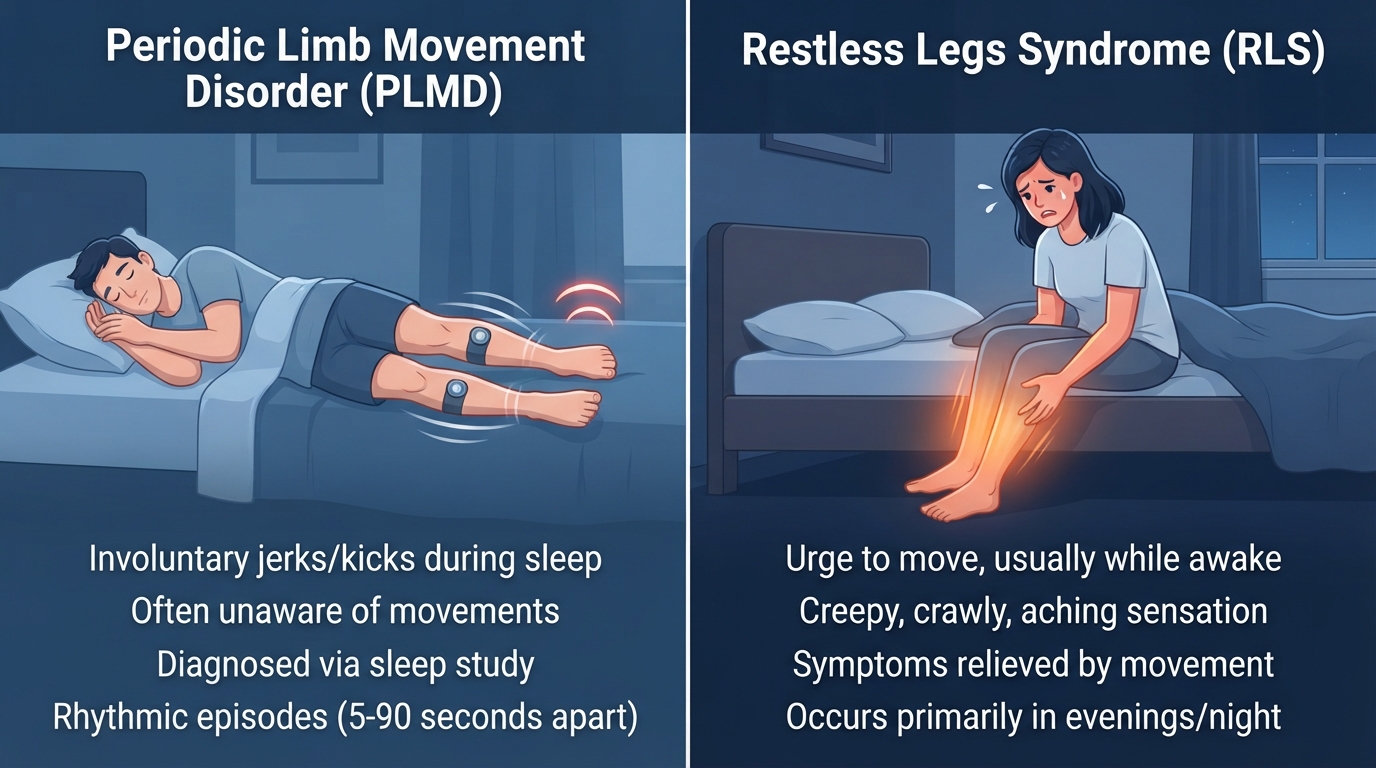
| Feature | PLMD | Restless Legs Syndrome |
|---|---|---|
| Main experience | Movements during sleep, often unnoticed | An urge to move your legs while awake, usually evenings |
| Discomfort | Usually none that you feel | Creepy, crawly, or aching sensation relieved by moving |
| How doctors diagnose | Overnight sleep study | Symptoms and history |
| Movements in sleep | Core feature | Common; many people with RLS also have them |
RLS is a daytime and evening condition with a voluntary urge to move. PLMD involves involuntary movements in sleep. Movements that occur while awake count as a symptom of RLS, and only movements during sleep can suggest PLMD. Read our guides on restless legs syndrome and restless body at night. Sudden single twitches as you fall asleep are usually hypnic jerks, which are a different, usually harmless phenomenon.
How Do Doctors Diagnose PLMD?

PLMD is a diagnosis of exclusion. Under ICSD-3-TR criteria, a doctor needs:
- A sleep study showing periodic limb movements in sleep
- More than 15 movements per hour in adults (more than 5 per hour in children)
- A sleep problem or daytime impairment that is not better explained by another disorder
Doctors do not diagnose PLMD when narcolepsy, restless legs syndrome, REM sleep behavior disorder, or untreated obstructive sleep apnea is already present, because these conditions often cause abnormal movements in sleep. Having a high movement count alone does not make a disorder. Many people have limb movements and sleep fine. Our overnight sleep study guide explains the test, and our guide on insomnia or sleep apnea explains why doctors rule out apnea.
What Causes Periodic Limb Movements?
Several factors link to limb movements in sleep:
- Low iron. Doctors often check ferritin and transferrin saturation. For restless legs, the AASM recommends iron when adult ferritin is below 75 ng/mL or transferrin saturation is below 20 percent. See iron deficiency and sleep.
- Medications. A medical reference warns doctors to use caution with certain antidepressants, including mirtazapine, venlafaxine, sertraline, fluoxetine, and amitriptyline, because they may aggravate periodic limb movements. Never stop a prescription on your own.
- Other sleep disorders. Restless legs, narcolepsy, REM sleep behavior disorder, and sleep apnea all link to limb movements.
- Neurological and medical conditions. Some neurological conditions and kidney disease can contribute.
What Helps?
Evidence for treating PLMD itself is limited, so doctors lean on clinical judgment. A medical reference notes the lack of evidence on drug treatment. These steps are common:
- Check iron. Ask your doctor about ferritin and transferrin saturation. Low iron is a treatable contributor.
- Review medications. Ask whether any of your medicines could worsen limb movements.
- Treat other disorders. Treat sleep apnea or restless legs if present, then reassess.
- Consider medication when needed. For restless legs, the 2024 AASM guideline recommends gabapentin enacarbil, gabapentin, or pregabalin in adults, and it suggests against clonazepam. That guidance moved away from dopamine agonists as first-line options. Those recommendations cover RLS, so ask your doctor what applies to PLMD.
- Support your sleep. If insomnia comes with limb movements, CBT-I can help. See our CBT-I guide.
Not sure whether your nighttime movements need testing? Book a consultation with The Sleep Consultant. We cannot diagnose or treat movement disorders, and we will help you organize what you or your partner notice and prepare for a medical visit.
What the Research Shows
PLMD needs a sleep study. ICSD-3-TR criteria require more than 15 periodic limb movements per hour in adults, plus a sleep disturbance or daytime impairment that nothing else explains.
PLMD is a diagnosis of exclusion. Doctors do not diagnose it when RLS, narcolepsy, REM sleep behavior disorder, or untreated sleep apnea is present.
Iron testing is a standard first step. The AASM advises checking ferritin and transferrin saturation in people with restless legs, and recommends iron when ferritin is below 75 ng/mL or transferrin saturation is below 20 percent in adults.
Evidence for PLMD treatment is limited. A medical reference notes the lack of evidence on drug treatment, and some antidepressants may worsen limb movements.
This article is for educational purposes only and is not a substitute for personalized medical advice, diagnosis, or treatment.
If you would like to see how we might be able to help you with this deeper, schedule a free consult here.
Want a Free Starting Point?
Join the free sleep course and community: Join the Sleep Nirvana Club
When to Seek Professional Help

- A partner reports repeated kicking or jerking during your sleep
- You feel unrefreshed or very sleepy despite enough time in bed
- You have an urge to move your legs in the evening
- You take an antidepressant and notice new leg movements at night
- You snore loudly, gasp, or feel very sleepy during the day
Frequently Asked Questions
What is periodic limb movement disorder?
PLMD is a sleep disorder with repetitive leg or arm movements during sleep that disturb sleep or cause daytime impairment. A sleep study confirms it with more than 15 movements per hour in adults, once other causes are ruled out.
Is PLMD the same as restless legs syndrome?
No. Restless legs syndrome causes an urge to move your legs while awake, usually in the evening. PLMD involves involuntary movements during sleep that you often do not feel. Many people with restless legs also have limb movements in sleep.
How do doctors diagnose PLMD?
Doctors use an overnight sleep study that counts limb movements per hour. A count above 15 in adults, plus a sleep problem or daytime impairment that nothing else explains, supports the diagnosis. They also rule out restless legs, narcolepsy, REM sleep behavior disorder, and untreated sleep apnea.
Can low iron cause limb movements in sleep?
Low iron links to restless legs and limb movements, and doctors commonly check ferritin and transferrin saturation. The AASM recommends iron for adults with restless legs when ferritin is below 75 ng/mL or transferrin saturation is below 20 percent.
Can antidepressants cause periodic limb movements?
Some can. A medical reference lists mirtazapine, venlafaxine, sertraline, fluoxetine, and amitriptyline as possible aggravators. Talk to your prescriber before you change any medication.
When to Work With a Sleep Consultant
Limb movements in sleep need a medical look, especially if you feel unrefreshed. If you want help organizing what you have noticed and preparing for the right appointment, we can help.


