




Here’s a glimpse of what you’ll learn:
Jack’s Origin Story: Jack’s journey into the sleep and mattress industry began 21 years ago, fueled by his family’s challenges with cancer and the quest for a sleeping solution that addressed both comfort and health concerns.
Essentia’s Evolution: Starting with a focus on cancer patients and those in recovery, Essentia has evolved to cater to a wider audience seeking performance and wellness, including pro athletes and high-performance individuals.
The Science of Sleep: Jack discusses how Essentia’s innovative mattress design significantly improves REM sleep and deep sleep, as evidenced by a study showing a 20-60% increase in these crucial sleep stages among athletes.
Understanding Mattress Toxins: The conversation delves into the harmful effects of conventional mattresses on sleep quality and health, highlighting the importance of choosing the right materials for both comfort and safety.
Simple Yet Effective Sleep Hacks: Beyond mattresses, Jack shares his personal sleep hack of using light-blocking glasses to improve the onset of sleep, emphasizing small changes that can lead to significant improvements in sleep quality.
In this episode…
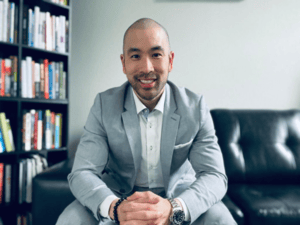
In this episode, we dive deep into the importance of what we sleep on and how it affects our overall health and performance. Jack D’alascio shares his personal and professional journey in creating Essentia, a revolutionary organic mattress company. We explore the science behind sleep, the detrimental impact of toxins in conventional mattresses, and how optimizing sleep with the right products can transform our lives. Jack also offers valuable insights into simple yet effective sleep hacks, emphasizing the holistic approach to achieving better sleep. Whether you’re a high performer looking to maximize your productivity or someone seeking to improve your health and well-being, this episode is packed with actionable advice and fascinating revelations about the power of a good night’s sleep. health strategies. success.
Resources mentioned in this episode:
Transcription
(0:00) Welcome to the Sleep Experience Podcast, where we take a deep dive into the latest sleep hacks, (0:08) gadgets and strategies to skyrocket your productivity to new heights. Being a high(0:14) performer is all about resting at 100% so you can execute at 100%. Thanks for listening to(0:27) the Sleep Experience Podcast.
We’ll see you next time on next week’s episode. Be sure to subscribe (0:33) and follow us to get future updates on everything sleep, energy, focus, stress, and better performance. (0:46) Hey, this is Riley, host of the Sleep Experience Podcast.
At the Sleep Experience Podcast, (0:51) we interview health experts and teach our community how upgrading their sleep is the (0:55) one thing that they need to unlock their biological code and maximize their performance in an effortless (1:00) way by doing more with less. Do you want to become a productivity machine, have genius (1:04) ideas automatically pop into your mind, stop feeling so stressed, build better relationships (1:08) and generate more income? Optimizing your deep sleep can do just that. Visit www.thesleepconsultant.com (1:15) to learn more.
My guest today is Jack Dell’Accio. Jack is a CEO and founder of Essentia Organic (1:22) Mattress, a health and wellness company that makes the only natural foam mattresses in (1:26) the world, combining six elements that cover whole body recovery. Featured in Oh!, the (1:32) Oprah Magazine, Anderson, the Meredith Vieira Show, the Rachel Ray Show, the Huffington (1:36) Post, and Dr. Oz’s Hot List as a number one favorite product, Essentia is a top choice (1:44) among pro athletes, celebrities, and health gurus.
Jack, welcome to the show. (1:49) Thanks, Riley. Nice to be here.
(1:52) Yeah, it’s a pleasure to have you on. Generally, we have a lot of genetic experts and other(1:56) things, but I think getting right to the sleep at hand, I think it’s one of the most (2:00) important is, what are we actually sleeping on every night and what is made up of that? (2:05) It’s one thing that a lot of people have debate on and it’s one of the biggest questions I (2:09) get a lot. What’s the best mattress? What’s the best pillow? Should it be hard? Should (2:12) it be soft? I’m really excited to dive in here today and I’m really excited to have (2:15) you on.
Thanks for coming on. The very first question that I have and I like to ask all (2:20) my guests is, what was your origin story? What is your journey into sleep and mattresses? (2:25) Where did that all start for you? (2:26) That goes back, I guess, for around 21 years ago. My family was in the latex phone business, (2:34) so I was quite familiar at the dinner table.
It was a constant conversation for years, (2:40) but I was in a separate business altogether. What ended up happening is, I had two family (2:46) members who were undergoing cancer treatments. Suddenly, things started to change in the (2:51) household just because of their intolerance to toxic air, which didn’t seem toxic to us (3:01) healthy people, dealing with joint pain and all kinds of physical pain from the treatments (3:08) that they were undergoing.
One of the things being from that family latex history, simple (3:15) enough, is we have these clean organic beds, but that wasn’t enough. That created some (3:21) allergic reactions and respiratory issues, micro dust issues. There are a lot of things (3:27) wrong in those things.
I just started to research and what is needed. What is needed for people (3:37) with physical pain completely is the opposite of what people need as far as healthy, clean (3:44) indoor air environment. The memory foams out there, while physically resolve the pain (3:52) issue, they didn’t resolve the clean indoor air issue.
It was a journey that lasted three (3:57) to four years of trying to develop a slow response latex foam that really was not just (4:02) a tagline or catchphrase, but that really worked. Initially, in our first few years, it was (4:10) either cancer patients or people in remission, recovery. That was our original story.
From (4:18) there, I guess, like everything that evolves, we went from just people with severe issues (4:28) to people with lifestyle and prevention to eventually performance and upping their game. (4:36) That’s been the initial journey of Essentia. (4:39) Yeah, that’s amazing.
You’ve gone through every single stage of a person along that (4:44) spectrum there. That’s amazing. Now, you’re dealing with more of a high performance and (4:49) also a mainstream audience fast forwarding to today? (4:53) Obviously, anybody with ailments and life challenges, they’re still part of our base.
(4:59) They’re still part of our core customers that we take care of. As of 2012, when I continued(5:06) to the development of the product and the foam and the cores and came across more than(5:13) just being organic and pain relieving, by 2012, I patented new designs in the cores. (5:22) We started seeing performance benefits.
We started working with pro athletes. Over 30% (5:29) of NHL hockey players sleep on Essentia. We have NBA players, NFL players.
There are so (5:35) many different sports for Olympic athletes. Today, it’s really interesting because back (5:41) then, we were doing lab testing. Today, with wearable devices, we’re able to track so much (5:50) easier how much we’re improving REM sleep and deep sleep.
Just last year, we ran a double (5:56) blind study with 75 athletes. We show that we have 20% to 60% increase in REM sleep and (6:05) deep sleep. It’s a fun time to be in performance.
(6:10) No kidding. It’s funny with high performers. They don’t care how they feel.
They just want (6:15) to get a number that’s above 90 on their sleep score, whether it’s an Oura ring or a watch (6:19) or something. It becomes a game for them. They’ve tried all these things and expensive (6:24) tech and whatnot, but it’s really the mattress and these other things that can really just (6:27) be a needle mover for them.
It’s one thing that it seems simple, but it’s not because (6:32) it’s not just a regular mattress you need. I find that very fascinating. It’s interesting (6:36) for a lot of these high performance types how much of a game it can become.
(6:40) Beyond just athletes that have been using your mattresses, people who are other high(6:46) performance like executives, CEOs, entrepreneurs, I guess anybody in general who switches to (6:53) your mattress, do they notice, is it an overnight change if they go from their old mattress (6:58) beyond just the memory foam, but the organic material? Do they notice a performance in (7:06) their mental clarity pretty shortly after? It’s an interesting thing. I think that(7:12) falls into different buckets depending on where they are in their as far as age goes. (7:19) There’s a big well-known biohackers, Dave Axbury is a user of our product, Ben Greenfield, (7:26) real big fitness guy, he’s a user of our product, and so many others.
Those guys fit (7:31) into one pocket. They’re doing everything else well. Because they’re doing everything (7:38) extremely well and they use trackers, they’re able to quantify just how much better they’re (7:46) doing.
When we look at certain athletes, we know that their reflexes are better. (7:52) That shows that mental clarity that they’re able to have. Then we have just the regular (7:59) customers.
I say it gets into pockets just because sometimes when you’re very young, (8:05) you’re not noticing everything in your environment, so you won’t pick up so quickly. (8:10) We have people in their 40s and 50s and we noticed that they have an immediate (8:15) depreciation for the change, whether it be immediate pain management. Once you start (8:21) eliminating all of these sleep inhibiting stimulants, whether it be pain, whether it (8:27) be toxins, whether it be heat, you immediately see a change within three, four days.
It doesn’t (8:33) take much for you to have less stress in your day, a lot more happiness. These are all (8:41) just the byproducts of good sleep is happiness. Yeah, totally.
It’s kind of like Pareto’s (8:48) principle. You get 80% of the results, 20% of the work. You buy the right mattress one time (8:53) and that’s something that you’ll have for years to come.
It’s so simple and we all have to sleep (8:56) anyway. Opposed to trying to micromanage all these symptoms, you just do one thing and it overlaps a (9:01) lot of other areas as well at the same time. The solution is simple.
The delivery of that (9:08) solution is complex and complicated. What I mean by that is that it’s not easy making this perfect (9:15) product. As a consumer who doesn’t know with all the noise out there, what is the right product? (9:21) Because everyone’s saying they’re making the best product, right? Which one is it? (9:25) And people turn to what they think is simple as popping a pill.
But when you get into sleep pills (9:32) or any enhancement that way, you’re working against REM sleep and deep sleep. You’ll be (9:41) knocked out but you won’t feel better in the morning because you actually haven’t had proper (9:46) regenerative sleep. Yeah, which equals more coffee, which equals more stimulants and then (9:51) you can’t sleep as well and the cycle just repeats itself on and on.
Quick question for you. People (9:58) might be wondering, what’s wrong with my regular mattress now? Could you touch a little bit about (10:02) toxins within the mattress and maybe about some of the materials people want to look for (10:07) for a mattress? Because some people, it’s case by case. Some people need a hard mattress.
Some (10:11) people need a soft mattress. But if you can just touch on that spectrum, that’d be great. (10:15) This will be the part of the tough things.
One of the first things from the top of the bed that (10:20) you need to eliminate from all of our studies is you need to eliminate the whole quilted (10:27) bed top, which whenever you see those waves, those bumps, those cushioning surface, well the cushioning (10:34) surface is the first thing to go. Why? Because it could be synthetic polyester, which is (10:39) the main part that’s out there. That’s a nesting ground for dust mites.
It accumulates all of your (10:44) body excretions, nests in there. That becomes a full buffet for bed bugs, dust mites. That’s (10:52) where they live.
Ultimately, the proteins of those feces and dead bodies of dust mites (11:02) triggers a reaction to your central nervous system. From the surface, you don’t want to (11:06) have any batting. Whether it be organic or non-organic, you don’t want the nesting ground (11:12) there.
That, just in your movement, is lifting up micro dust in the air. There’s a lot with (11:22) allergens and respiratory issues that you wouldn’t want to have at surface. The main part (11:28) that now shifted to toxins is most mattresses conventionally are made of a very inexpensive (11:40) coil base.
Anything of value is one to three inches at the top of the mattress. (11:47) Everything else below it doesn’t have much durability, support, longevity. All that kind (11:53) of stuff is not there.
Those top three to three inches will typically be made of a high-density (12:00) polyurethane material. That’s what is constantly emitting and disrupting your (12:08) potentially clean air, indoor air quality. Those toxins are simulating your central nervous system, (12:15) preventing you from staying longer in your REM cycles and deep sleep cycles.
That will just (12:21) give you a lower quality sleep. If you look at the lifetime of this product, I know some people (12:25) will say, well, the off-gassing is limited because it’s on a diminishing scale. It’s highly (12:31) off-gassing when you unpack it.
It’s constantly diminishing. The durability of these products is (12:39) once they’ve lost all of that moisture and emission qualities, they actually become dry, (12:46) brittle. They lose their support qualities.
Then they break down into dust. That becomes (12:51) more micro dust that could be in the environment. There’s so many real touch points of what’s (12:59) happening to a product in a lifetime because you’re not buying it for 60 days, 90 days.
(13:03) You want to get 10-20 years out of your mattress. When we talk durability at Essentia,(13:10) we’re not just saying how long you’re going to keep it before you invest in a new one. (13:13) How long is it performing for you? If it’s no longer giving you the support and sleep you need(13:18) in year four, I can’t really say it lasted 20 years if it’s failed on you for 16.
(13:23) Yeah, exactly. Yeah, totally. You think of the ROI.
Let’s say you’re a high performer. (13:30) You’re an entrepreneur. You think of that additional good deep sleep and REM sleep.
(13:35) How does that affect your focus, your flow during the day? How does that translate to more money in (13:39) your business, more deep work, more flow, better relationships with loved ones? It’s all these (13:44) indirect consequences. It doesn’t seem obvious to us in front of us, but just making that change, (13:50) those orders of consequences are just magnitudes higher. (13:54) It’s a real and important tool and an important piece of equipment for your wellness.
I have a (14:00) factory. I’ll give an analogy of when we were building a factory. When we started out, we were (14:06) looking, well, what’s the best product at the lowest price we can get for some of our production (14:12) line items? I’ll tell you, any of the cheaper equipment that we had, it didn’t make it five (14:18) years.
The investment you make in your production line, the ROI lasts many years and you can (14:28) depreciate it longer. Well, the same thing with your body. If you’re not investing in the right (14:32) tools, the right environment, you’re not going to perform as well.
You’ll be paying for that (14:38) throughout the whole period. Yeah, I think it’s entirely true. (14:43) Now, beyond mattresses, a big question I get a lot is, what is the best pillow, (14:47) Riley? What pillow should I use? Should it be memory foam? Should it be soft? Should it be (14:50) hard? Again, it’s case-by-case, but what is your opinion in 2023 on pillows? (14:56) I do think it’s case-by-case.
Number one is, first and foremost, you need to have (15:02) the right mattress fit because the right pillow on the wrong mattress just may not work for you. (15:08) Ultimately, what people need to be thinking about when it comes to a pillow is, it can’t (15:14) be raising your head. The part that needs the support is your neck.
It’s not the cranium in (15:22) your head. When we design some pillows, we try to eliminate any of the pressure on the cranium (15:27) and just give the support for the neck area. It allows you to make sure that your head is not (15:34) tilting up and that it aligns well.
You need to make sure that the proper density is really just (15:42) for durability, but the right softness, the right contouring, the elasticity, and the thickness (15:47) that’s specific to your shoulder and neck. If you’re feeling it on the top of your head, (15:53) that’s the wrong pillow. Yeah, I think that’s really important.
(15:57) The other thing you touched on as well with the toxins is, a lot of people think physical(16:02) pains they have within their joints and they’re not able to sleep and they’re on (16:07) arthritis medication, so many other things. It can be indirectly related to the toxins too, (16:11) because the more inflamed your body is with these toxins, these hidden stressors that we’re not(16:16) aware of, your immune system goes into overdrive. Now, 80% of our immune systems in our gut and it (16:22) just affects all these other things, which can consequently affect the joint pain too.
(16:26) It’s amazing that once you lower these toxins, it’s like a guard. I like that analogy I’ve used(16:31) quite a bit is, you don’t want to plant seeds in a garden that’s full of weeds. We want to remove (16:36) the weeds first, and then we can start planting those clean seeds.
If you’re always constantly (16:42) around these internal fires that are sounding the alarm bells of your immune system 24-7, (16:46) it’s hard to get better. I think the mattress is such a great place to start. (16:51) It really is.
Your body can’t do everything all at once. It sort of can, but at the same time, (17:00) you’re stressing the system, and you’re not allowing it to be more restful if it’s constantly (17:08) dealing with trauma. How you raise the bar on how much trauma the body can handle, but (17:14) you need to be eliminating and helping your body be as effective as possible, (17:21) rather than adding the hurdles for it.
Completely, yeah. Everyone has a different (17:27) stress bucket, and even a little bit of stress can really send somebody off. Yeah, definitely (17:33) something to look at for sure.
Besides mattress and pillow, any other sleep, your favorite sleep (17:39) hacks could be advanced sleep tech that you personally like? I like something pretty simple. (17:46) You know what? I wish I had one here. I usually have them around, but for me, something pretty (17:51) simple is the light-blocking glasses.
I have both. I have those yellow (18:00) lenses, but I don’t know if you’ve ever tried the red lens, the one that really takes out multiple… (18:04) TrueDark? TrueDark. I love the TrueDark.
Yeah, they’re great. Those are awesome. (18:08) To me, because that onset of sleep is so important to get on with it, especially if you’re (18:14) busy like myself.
I can speak for myself. My brain is always thinking about work and all that, (18:19) and there’s a few techniques as far as writing lists and getting into sleep routine, which are (18:24) really critical, but to me, one of the TrueDarks, I put those things on. I don’t last 20 minutes at (18:29) work.
It’s time for me to go to bed. It’s amazing, right? Because it’s like (18:36) our melatonin is so suppressed by all the blue light around us before bedtime, (18:40) that when we put those glasses on, that’s when our body is naturally tired. Yeah, it trips people (18:44) up sometimes, thinking like, why am I tired all of a sudden? That’s your body’s natural rhythm, (18:48) right? I know it’s really funny you say that.
I completely relate to it. Even though you look (18:53) like X-Men, you get used to it pretty fast. Yeah, I think it’s a really good investment as well.
(18:58) I wear my cape online. I could throw a YouTube concert with the yellow lens lens. (19:06) That’s also good.
Yeah, some other sleep tech, I’ve been experimenting with under the mattress. (19:12) It’s kind of like the ChiliPad to keep it cool. There’s also a new one called Eight Sleep.
It’s (19:16) a little bit more of an investment, but these are other ones. Temperature is important too. (19:21) It’s all these things in your toolbox that you need to do, but I think (19:24) the most important is really that mattress, is that initial investment, and then the rest can (19:29) go around that.
Part of the things that we do is we’ve been testing when it comes to temperature. (19:38) What’s really important, we’ve noticed, is not just to be in a cold environment or cooler (19:42) environment, but it’s really something that dynamic that has to happen throughout (19:47) your sleep cycles. If you’re constantly dropping in temperature and your body (19:52) temperature, your body heat is escaping, that active process of dropping in temperature (19:59) keeps you in these deeper sleep cycles longer, much more than just being cold.
It’s a matter (20:07) of how do you allow your body heat to escape, and that’s how we design mattresses. We’ve designed (20:12) we actually have record-breaking, we’re the only ones who have this amount of drop in temperature. (20:18) When we work with some pro athletes who are really wound up from their training and they (20:23) need assistance in cooling down, we actually suggest from Chili Sleep, their weighted blanket.
(20:31) The reason we suggest that is that we want the coolness to come from on top, allowing(20:37) your body heat to escape through our mattress, which allows that dynamic (20:45) heat escape to happen. That’s one of the tools that we also suggest very frequently for people (20:52) who have a tendency to get to bed hot. Again, a lot of people are focused on the (20:58) onset of sleep, we’re focused on what happens for the full six to eight hours afterwards.
(21:03) Yeah, that’s a little bit more important, isn’t it? Yeah. Amazing, Jack. I love everything you(21:09) just said.
I really appreciate you coming on today. Any last words of wisdom for our (21:11) listeners today before we close things off? All good. Thank you very much.
It was nice (21:15) catching up and talking sleep, and hopefully it was helpful for people. (21:20) Yeah, thank you. I learned a lot, I’m sure our listeners did too.
(21:24) If we want to learn more about you, where can we visit? (21:26) Our website is myessential.com. You can go on there, you can follow us on Instagram. (21:34) We have Instagram handles. We often send out some tips and information, Facebook, Instagram, (21:40) but mainly everything leads.
We have a huge depth of analysis and lab studies, (21:47) and everything that we’ve done is all on our Learn pages on our myessential.com website. (21:52) Amazing. Yeah, I love that.
It’s all backed up by science. That’s really important. (21:56) Guys, thank you so much.
I hope you enjoyed the show. If you’d like to learn more about how sleep (22:00) can benefit your personal and business life, visit thesleepconsultant.com. Until next time. (22:07) Thanks for listening to the Sleep Experience Podcast.
We’ll see you next time on next week’s (22:12) episode. Be sure to subscribe and follow us to get future updates on everything sleep, (22:18) energy, focus, stress, and better performance..