

Here’s a glimpse of what you’ll learn:
- Marcus’s Start in Sales: How Marcus transitioned into sales, overcame initial failures, and used personal development to turn his career around.
- Why Introverts Succeed: How introverts leverage their natural strengths like listening and building trust to succeed in sales.
- Health’s Impact on Sales: How Marcus’s focus on health, including fitness, diet, and sleep, increased his energy and productivity in sales.
- Marcus’s Sales Framework: How Marcus’s eight-component framework helps sales professionals close deals more consistently and efficiently.
- Mindset and Habits: How Marcus uses mindset training and disciplined habits to achieve sustainable success in sales and life.
- Tracking Health Metrics: How Marcus uses tools like the Oura Ring to optimize his sleep and improve his focus, decision-making, and performance.
- Challenging Prospects Effectively: How Marcus prioritizes serving prospects by challenging their beliefs and guiding them to transformative solutions.
In this episode…
- [00:02:30] Marcus shares how he stumbled into sales and why he decided to stick with it despite early challenges.
- [00:10:45] Can anyone learn sales? Marcus explains why sales is a universal skill and how introverts can thrive in the field.
- [00:15:20] The evolution of Marcus’s health journey: from cutting out junk food to sleep tracking and optimizing habits.
- [00:25:30] How improving physical health and mental clarity translates to better sales results.
- [00:30:00] Marcus reveals his “Powerful Sales Framework” and the eight components that lead to consistent, scalable sales success.
- [00:40:00] Why sales success starts with believing in the transformation your solution provides.
- [00:45:00] The importance of mindset, discipline, and creating habits that bypass reliance on willpower.
- [00:50:30] How Marcus helps clients optimize their personal and professional performance to close bigger deals faster.
Resources mentioned in this episode:
Marcus Chan’s Website: www.venliconsulting.com
Marcus Chan’s YouTube: youtube.com/@MarcusChanOfficial
Marcus Chan’s LinkedIn: https://www.linkedin.com/in/marcuschanmba/
Transcription
(0:00) Hey, this is Riley host of the superhuman podcast at superhuman. (0:05) We interview health experts as well as other high performers and teach our (0:08) community how to optimize their health, supercharge their performance and unlock (0:12) their biological code so they can do more with less. (0:15) Do you want to fix annoying health issues, slowing you down, become a productivity (0:18) machine, have genius ideas automatically pop into your mind, stop feeling so(0:21) stressed, build better relationships and generate more income, optimizing (0:25) your inner machinery can do just that.
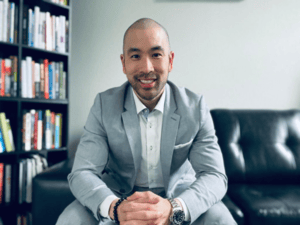
(0:27) Visit www.peakperform.com to learn more. (0:31) My guest today is Marcus Chan. (0:33) Marcus is the CEO of Venley Consulting Group.
(0:35) He helps B2B salespeople earn 250 to 500,000 a year and develop (0:40) record-breaking sales skills with his coaching and training (0:43) programs for reps and teams. (0:45) He’s an official member of the Forbes business council and has also been (0:48) featured in Forbes, Yahoo finance, market watch, and more. (0:51) He’s a four times Salesforce top sales influencer and wall street (0:56) journal, bestselling author of six figure sales secrets.
(0:59) Prior to this, Marcus was in corporate America for 14 years. (1:03) And that time he has worked for two fortune 500 organizations and (1:07) promoted 12 times in eight years. (1:09) He also lives in Portland, Oregon with his wife, Sarah and son, Roman.
(1:15) Marcus, welcome to the show. (1:17) Hey, I’m pumped to be here. (1:18) I think we’ll have some fun today.
(1:19) Yeah, I, I really appreciate you coming on. (1:21) And in particular with sales, because everybody needs to get better at sales, (1:26) no matter what industry they come from. (1:27) And that can be interpreted as a lot of ways.
(1:30) And I guess my first question that I’m really curious about is what in the early (1:33) days of sales, what got you into it? (1:36) And then what made you stick through sales without going on another path? (1:39) A good question. (1:40) You know, I think, I think for like a lot of salespeople and myself included (1:44) is I don’t think, you know, when I was a kid, I was like, I’ll grow up. (1:48) I want to be a salesperson.
(1:49) I want to sell things. (1:51) Um, even when I graduated, I didn’t know what I wanted to do.(1:53) And I was like, I was, I mean, I was always like decent school, (1:56) nothing really amazing.
(1:58) So when I graduated, uh, college, I really didn’t know what I was going to do. (2:02) And one of the first roles I was in a lot of different places. (2:05) And one of the, one of the opportunities was in actually B2B sales.
(2:08) Now I didn’t know his position as like B2B sales. (2:12) And it was more so that, uh, I’d work for, uh, I’d work for, it (2:16) was a Fortune 500 company. (2:17) I worked on the rental side of the business or the retail side of the (2:20) business where it was rental cars.
(2:22) And basically I had a basic wear suit every day and people would rent cars (2:26) and they had to sell them insurance. (2:28) And I didn’t really see it as like even a sales internship. (2:30) Cause I was learning about how to run the business from (2:33) the P and L and everything else.
(2:34) So when I graduated, I had multiple different offers. (2:37) They had a new division in which the director was my (2:40) former area sales manager. (2:42) And he said, Hey, we have this new opportunity.
(2:44) It’s it’s business to business. (2:46) We don’t have any customers. (2:48) We’re going to open up three operations.
(2:49) We want to bring you in and we want you to help us basically grow the business. (2:53) And I trusted him. (2:55) I saw the huge opportunity.
(2:56) So I jumped, I jumped head in now. (2:58) I didn’t realize at the time that it was considered B2B sales in my head. (3:02) I’m like, I’m going to help build some scratch.
(3:04) So I wouldn’t even see as sale. (3:05) I just, I’m like, well, this is a cool opportunity to be on the (3:07) ground floor or something really cool. (3:08) It basically build it up.
(3:10) And when I got into it, this was in June, 2007, I realized (3:14) pretty quickly how hard it was.(3:17) So, you know, there was no real training. (3:19) There was no real support.
(3:21) And I was told to basically go out to go out and knock on doors, cold (3:24) call people and try to basically convince them to buy. (3:26) Wow. (3:27) And, uh, it was actually a real struggle for me because I never (3:29) did anything like that before.
(3:30) I’ve been customer service roles. (3:33) I worked in Russell. (3:33) I started working around like five years old in a restaurant.
(3:35) So like, wow, I could do all like that type of retail consumer stuff. (3:40) Um, but like going out and basically trying to convince people to have (3:43) meetings with me and like knocking on doors and cold calling, cold emailing (3:47) to complete strangers was a whole new world for me.(3:50) That’s tough.
(3:51) I almost got fired. (3:52) Actually. (3:52) I was the worst rep.
(3:54) You know, I was the worst rep and I was definitely very, very stressed. (3:57) And, um, you know, I remember my boss pulling me and said, you know what? (4:00) He’s going to fire him if I didn’t turn it around. (4:02) Right now, eventually I did figure it out, had some success.
(4:05) And then I ended up staying in that career for over 13 years. (4:08) Got promoted a number of different times, you know, won every award, (4:11) dealt with a lot of cool things, but ultimately stayed through it because, (4:15) um, well, number one, it helped me become like a better version of myself. (4:19) Right.
(4:19) So probably lies to that kind of personal development piece. (4:21) I had become a better version of myself to actually excel in the role. (4:23) You become exposed to all your weaknesses in sales.
(4:25) Right. (4:26) And then number two, it just became, it became a path where it (4:31) didn’t care about my skin color. (4:33) It didn’t care about my race.
(4:34) It didn’t care about my education level. (4:36) If I could deliver results, I create a value. (4:39) When I create a value, I create my own ticket.
(4:41) And I realized in sales as well as few industries, you actually do that in. (4:45) So that’s why I jumped right head into it. (4:47) So, I mean, I did for quite a long time and it was incredible run.
(4:50) And then I decided to start my own business, basically help (4:53) people do basically what I did. (4:54) So I’ve been doing that for five years now, but it’s been a fun journey. (4:57) Yeah, that’s, that’s incredible.
(4:59) And do you feel like anybody can learn sales? (5:02) Like it’s a skill set that anybody can pick up despite their limiting (5:06) beliefs, despite how shy or introverted they may think they are.(5:09) Do you feel like everybody probably sells in their own way and there’s (5:12) different, you know, different tastes and colors of the rainbow can. (5:16) So I guess my question is, can anybody learn sales of everybody (5:19) that you’ve interacted with? (5:21) Well, here’s the thing.
(5:22) If you’re, if you’re willing to learn sales, anybody can learn sales, right? (5:27) So if you have the open mind that you can sell, that’s the first thing. (5:30) It’s also being able to perceive that selling is not a bad thing. (5:33) And a lot of people don’t realize, like you mentioned, (5:35) literally everybody has to sell.
(5:37) So a sales really, a sales really influenced, which is you’re (5:40) influencing a third party to part ways of time, money, or resources. (5:44) So the more effective you are doing that, the better it’s going to be. (5:47) It doesn’t matter what a role you’re, you can be an accountant, right? (5:49) But you pretend to have to sell internally to other stakeholders, (5:53) your company, to your boss, to your kids, to whomever you can be custodian.
(5:58) Right. (5:58) You can be, you might be selling a certain thing. (6:01) So you need to switch, you know, can liners or something.
(6:04) Right. (6:04) So there’s always going to be some level of influence in (6:06) every role that you’re in. (6:07) Right.
(6:08) So, um, but if you’re open to it and you, and you realize how, how (6:12) high leverage of a skill it is, then you can learn to sell more effectively. (6:16) But if you believe, well, I’m this way.(6:19) I can’t learn to get better.
(6:20) Then of course you can get stuck, right? (6:21) Yeah. (6:22) It’s you get capped. (6:24) You can, I found actually introverts are actually the best, (6:26) some of the best salespeople.
(6:28) Oh, is that right? (6:28) Is it because they, uh, you know, try and learn more of the process(6:33) opposed to natural extroverts or just naturally, you know, they think (6:37) they would be great, but there’s probably a structure to sales too, (6:39) where the introverts like those types of systems to, to build on, I guess. (6:42) Well, I think a big part is typically, um, introverts. (6:47) I’m actually considered ambiovert.
(6:49) So I’m tested right down the middle. (6:51) So I was more introverted as a kid and then became more of an ambiovert (6:54) just probably, probably by the nature or probably the jobs that had, (6:57) or I kind of converted over time. (6:59) So generally what I’ve found, and I think the book, I think Daniel Pink’s (7:03) book says the sales human says ambio is actually the number one top salespeople.
(7:07) Um, but introverts are also very powerful too, because they generally (7:10) are better at listening. (7:13) They’re generally more inquisitive. (7:15) They generally ask more questions, which allows you to (7:19) connect deeper with somebody else.
(7:21) And majority of prospects don’t want to hear some fast talking, smooth rep. (7:26) They want to feel understood and heard. (7:28) Yeah.
(7:29) So like having that balance is really, really important. (7:33) That, yeah, that’s great. (7:34) I’ve, I’ve heard when you, you know, sometimes salespeople will stutter, but (7:38) it’s all those little things that make someone more human and it builds that (7:42) trust right away, opposed to the slick sales guy, like you were saying, (7:44) he was a good fast talker.
(7:46) I mean, maybe that works before, but kind of like industries become saturated, (7:50) sort of, you know, the same old sales call becomes saturated too. (7:53) So that’s where you can, you know, it kind of helps out in a lot of ways. (7:56) Now throughout your journey, I’m sure it’s got really busy at times and, (8:02) you know, just back to back.
(8:03) And despite all that, you’ve had tremendous success. (8:06) So how had, how had you managed your health, your energy throughout everything (8:11) else, maybe it was your sleep, your diet. (8:13) How did you personally do it? (8:15) Hmm.
(8:15) Good question. (8:16) So I’m going to kind of go back in time. (8:18) It’s been a bit of an evolution.
(8:20) All right. (8:21) So like, um, this probably started in probably like 2021, 2020. (8:27) I mean, when I was 21, 22 years old, this is like almost two decades ago.
(8:31) So when I was really struggling in selling and I really was like, (8:36) one of the first things I did was I went to the library, every possible (8:39) sales book and for a while, it was interesting was the books that had (8:43) the biggest impact on me actually weren’t the sales books or these(8:47) other ones that accidentally found. (8:49) So there were these personal development books.(8:51) Interesting.
(8:52) Yeah. (8:52) So for example, the one, the first one that really still sits in my mind (8:56) as having a high level influence on where I am today was Tony (9:00) Robbins awakening the giant within. (9:02) Hmm.
(9:04) And I realized at that point, if I want to become more, if I want to (9:09) achieve more, I had to become more. (9:12) And that was early on. (9:12) And that’s actually where I started to get a little obsessive (9:15) with, um, personal development.
(9:17) You know, it first kind of starts off like very, like Tony’s like, (9:20) Hey, affirmations, et cetera. (9:21) Right. (9:22) You don’t wake up in a yellow affirmations, you know, like that was cool.
(9:25) Right. (9:25) But then I started realizing, what are some other things I can do that (9:28) will increase my performance? (9:31) Right. (9:31) And there was things I would observe.
(9:34) So first off, it was like, okay, you know what? (9:35) I need to eliminate things that hurt me, eliminate things that (9:40) basically make me feel bad. (9:41) So for instance, this is 2007, 2008 timeframe. (9:45) The media would only talk about the recession and how businesses (9:47) were folding and shutting down.
(9:49) So I cut out the media. (9:50) I stopped listening to news and I replaced it with audio books on (9:54) tape or books on CD or books on my iPod. (9:57) Right.
(9:57) I listened to things that actually feed me instead. (10:00) I stopped reading fiction, only read nonfiction books that would (10:03) feed me and make me grow. (10:05) Right.
(10:05) So this is where it kind of started to begin. (10:08) And what was interesting is I started to sort of kind of make (10:12) that kind of small shift, right. (10:14) As I started to kind of progress my career, I got busier and busier, (10:17) busier and fast forward a couple of years later, I realized, huh, I (10:22) can’t eat the same way I used to eat.
(10:25) And I realized I’m like, man, cause I used to, I used to be competitive (10:27) So I was kind of used to just consuming like a, just a stupid amount of calories. (10:32) I’ll consume eight to 10 to eight to 10,000 calories a day. (10:35) Then I go swim like 10,000 meters in the day, have a dry line work.
(10:38) It’d be crazy. (10:39) And we just did it, but it was easier because you’re, you’re in high school. (10:42) Your body’s different.
(10:43) You’re younger. (10:44) It’s just a little bit different. (10:45) Now I’m in my mid twenties.
(10:46) I wasn’t going to say mobile workouts. (10:48) I wasn’t necessarily eating like eight to 10,000 calories, but I was (10:51) eating like pretty unhealthy, just a lot, a lot like, you know, a lot of(10:54) processed foods, um, you know, like pizzas, you know, takeout, um, unhealthy (11:00) things are, you know, full of GMO, whatever. (11:02) Right.
(11:02) So, so I started to learn about nutrition at that point and started to realize (11:07) I need to have some better health rules. (11:09) So I started to actually eat cleaner. (11:11) I also realized my workouts weren’t very well optimized.
(11:15) So I’ll go to the gym, take two hours, work out. (11:18) Right. (11:18) And at that point I was actually seeing my, my, my physical body kind of go down.
(11:22) So I’m like, huh? (11:24) Like, I’m like, I’m like, I’m still working on the same way. (11:26) I used to work out. (11:26) I’m still eating the same way.
(11:27) This is a problem. (11:28) So I started changing what I ate. (11:30) I started to change my workouts, getting really, really care with really (11:33) monitoring how I was working out, getting more efficient with my workouts.
(11:36) It’s hard to see better results. (11:38) Right. (11:39) And, and this became kind of a part of this journey.
(11:41) So kind of over time or the next probably five or so years, I can (11:44) even kind of refine that and get better and better at that. (11:46) Right. (11:47) Where I started to like, you know, take better care of my health.
(11:49) Eating, eating really clean for most parts, except for my cheap meal, (11:52) having super dialed workouts. (11:54) Right. (11:55) On top of that, I started getting really busy.
(11:57) So like I started running like big, like by the time I was 30, I was (12:00) running a sales org of 85 employees. (12:02) Wow. (12:03) So I was traveling a lot.
(12:04) I was in and out of planes. (12:06) So it was like, I was in a hotel room about a hundred plus nights a year. (12:09) Wow.
(12:10) And it was a lot, it was very high stress. (12:12) Right. (12:13) Cause it was also big or big number deliver.
(12:15) So I’m like, oh man, like I’m like, I need to continue to optimize. (12:18) Right. (12:19) And a couple of years later, I’m like, you know, I need cut out is (12:21) I need to cut out drinking.
(12:22) So I cut out drinking. (12:24) So I went from like, you know, it was like, I was a big drinker.(12:27) I drink a lot more in my early twenties and then I’ll pee it off.
(12:31) And I have a few drinks a week, but I started realizing I never slept as well. (12:35) Right.(12:36) Never felt as good the next day.
(12:37) If I had one too many, I would feel for days to come. (12:40) So I started to understand these impacts, but on top of that, I (12:44) realized I lacked the mental clarity. (12:46) You know? (12:47) So for instance, if I was, you know, if I woke up at four o’clock in the (12:50) morning, I’ve been traveling all day and I’m hanging out with my team (12:53) in wherever city I’m in and I’m with them all day, it’s crazy.
(12:56) Nonstop meetings with them and sales calls or trainings, whatever. (13:00) And by the time we get done with dinner, I have a couple of drinks at dinner. (13:02) Now I’m on the hotel room, eight o’clock at night.
(13:04) It’s already been a long day already. (13:06) And now I need to open my laptop. (13:07) I have 200 emails to go through.
(13:09) If I have like HR situations, I need to basically respond to emails. (13:12) And if I wasn’t clear, if I didn’t have a clear mind, I could potentially put (13:15) something as documented in writing that could potentially be not good. (13:19) So these are things I started to realize, like, Hey, the stakes are higher now.
(13:22) I need to become better at taking care of myself. (13:25) Right. (13:26) And then, um, continue to fast forward.
(13:28) And then you can kind of see this kind of buildable evolution, right? (13:30) It wasn’t like overnight change everything. (13:31) Right. (13:32) Um, and then when I started my own business and, and, uh, when I was 35, so (13:37) a few years later, I went all in my business, you know, it was a side (13:40) hustle before I turned to a full-time business and I went all in my business.
(13:43) And when I was 35 years old, health is pretty good. (13:47) I have certain rules for eating, eating well, doing all these things. (13:51) Right.
(13:51) And then, um, I started to get a little more sleep and (13:55) then I started sleep tracking.(13:57) Hmm. (13:57) So then I started doing sleep tracking rather than, I’m an ordering now.
(14:01) Right. (14:01) So yeah, I was going to ask, yeah, an ordering now. (14:03) Right.
(14:03) I can’t compare the stats on the Apple watch. (14:05) I wear like two different watches, right? (14:07) I’m a nerd like that. (14:08) So I started to track, you know, and look at my stats from even sleeping (14:13) and et cetera, and honestly, I started, I started to learn more about, (14:16) you know, in longevity, you know, like from exercise to diet to environment (14:22) to sleep and how basically it all a hundred percent impacts us.
(14:26) Yeah. (14:27) So, you know, I started as a, you know, from a layman’s perspective, (14:29) started trying to improve that by changing things, how I would sleep. (14:33) Right.
(14:34) So I’ll test different things. (14:35) Like, so I actually have sleep apnea. (14:37) So I’ve been, I was diagnosed for over 10 years now.
(14:40) So I started to like really look at like, Hey, like my sleep quality is (14:43) not correct that now the stats that back it up, you know, okay. (14:46) Number one, I’m not getting enough sleep.(14:47) And number two, my deep and REM are not that great either.
(14:50) Okay. (14:50) What are the things I can start doing? (14:51) So, you know, I tried to start hacking things around where it’s like, okay, (14:55) I’m going to start having like my temperature in my house ought to go, go (14:58) from 72 to 68 degrees, you know, Fahrenheit, you know, you know, at, at (15:02) nine 30 at night or nine o’clock at night. (15:04) So, so it’s cold when I sleep and basically increase a little bit later on.
(15:07) Right. (15:08) Yeah. (15:08) Blackout curtains in my, in my, in my room, uh, everywhere in the upstairs (15:12) where we all sleep in different rooms, only red lights after 8. (15:16) Right, right.
(15:17) Like, you know, way to blanket, you know, like all these things, no (15:20) screens, blue light screens. (15:21) It’s like all these little, little things I started to do, you know, to improve. (15:25) And I started to see actually improvements, right.
(15:27) So like, it wasn’t, it wasn’t like shocking improvements, but for instance, (15:31) you know, like, um, you know, I, I be, I be more attentive to my, you know, (15:36) one of my six hours, like average of seven hours of sleep, you know, and (15:40) then, um, my REM, you know, before it would, I get like something like (15:45) two, three minutes a night. (15:47) That’s it two to three minutes. (15:48) Yeah.
(15:49) It must be like 10, 15 minutes. (15:52) Right. (15:52) Wow.
(15:53) So it wouldn’t be great, but with some of these tweaks and I’d also observe, (15:57) like, so I started tracking, like, what did I eat the night before? (16:00) Cause I was the impact. (16:01) So like, what time did I eat? (16:02) What day, how did it process? (16:04) If I have a cheat meal, how does it actually impact my body? (16:07) Right. (16:08) Um, so I started kind of tracking all this data, uh, just in a Google (16:11) sheet with all my aura stats, which I do every single day.
(16:14) And then I’m like, okay, here’s some, I can see these observations. (16:17) Like, obviously if I eat a huge meal that night and I go to sleep late and I’m (16:21) watching a bunch of TV beforehand, completely jacks my sleep up. (16:24) Wow.
(16:25) Right. (16:25) So I can make better decisions off that. (16:27) Right.
(16:27) Um, but now it’s like, it’s, it’s still gotten better. (16:30) It’s not perfect. (16:30) Right.
(16:31) But it’s like, now it’s like, you know, it’s, I try to get both at least an (16:35) hour or an hour deep if I get that. (16:36) It’s like, it’s really, really good for me. (16:38) Right.
(16:38) Yeah. (16:39) Um, but it’s like, it has to be like the perfect combination, you know? (16:43) Yeah. (16:44) You, do you feel like you’re not really somebody, um, who can function (16:48) at peak performance with a little sleep? (16:50) I mean, it’s, it’s really not many of us, but you know, most people (16:53) need their seven to nine hours, but do you really find if you don’t (16:55) get that it affects you during your day? (16:58) You know, what’s interesting is, um, I think because of how I grew up (17:04) and how I’ve been kind of wired over time, um, I’m sure it does, but (17:11) I’ve trained my mind, my mind to not care.
(17:14) So like, which is a good and bad, by the way. (17:16) Right. (17:17) So like, even though it didn’t get enough sleep, I’ve learned how to (17:20) just push through all the way through.
(17:23) Yeah. (17:23) It’s that entrepreneur’s grit, right? (17:25) Yeah. (17:26) It’s like it’s a level of grit.
(17:27) It’s not, it’s not, it’s not healthy by any means. (17:29) So I’ve been working on that. (17:31) Right.
(17:31) So like, even like I’m testing, I’m testing out something for the (17:34) suite for next up next several weeks where I’m like, okay, you know what? (17:37) I’m gonna start waking up at four 45 in the morning. (17:40) And what I’m gonna do is I’m going to restructure my day, how I’m (17:43) going to basically work. (17:44) Right.
(17:45) And try to build a nap in, if I can. (17:47) Right. (17:48) Just kind of see how it works.
(17:49) If I lose a little bit of deficit in my sleep, I’m taking a little nap a (17:52) little bit later because you know, my brain works a lot better in the morning. (17:57) So like, I just, because of just how I’m wired, like I know if I start (18:01) working at 5 AM on like some deep work stuff for like three hours, I can get (18:06) so much more done in that three hour block than the rest of the day. (18:10) Yeah.
(18:11) So like, I’ve been testing that this week. (18:13) I’m like, this is kind of crazy. (18:14) And I’m like, it’s, it’s this week.
(18:16) My sleep is a little off now because of that. (18:18) Right. (18:18) Cause I’m not used to it.
(18:19) And the other challenge I run into is my kids got sleep apnea too. (18:22) He’s he’s seven.(18:24) So he doesn’t go to sleep.
(18:25) He also like he, his, his, his, his circadian rhythms a little off too, (18:29) where he doesn’t sleep late for a seven year old. (18:32) So like we’ve been trying to get that reduced, get that dad’s(18:35) like eight, eight o’clock. (18:36) We can, but he’s like a nine, 15, nine 30 to 10 o’clock guy.
(18:40) And he used to be like, yeah, we kind of got down to like nine and nine 15. (18:45) Yeah.(18:45) And that took us like years to get to that point.
(18:47) Wow. (18:48) Right. (18:49) So like, that’s a big part.
(18:50) Cause if I can get him down to like eight o’clock that I can go sleep at eight 30. (18:55) Great. (18:55) Then I can have, it would be, it would be, it would give me the extra time.
(18:58) That’s actually my, my, my limitations, but it was more so (19:01) like the constraint of time.(19:03) Absolutely. (19:04) You know, it’s in control of factors.
(19:06) Yeah, that’s right. (19:07) Yeah. (19:07) All in your control.
(19:08) Um, what’s really interesting is you can get a genetic test and it will tell (19:14) you what your heart wiring is. (19:16) If you’re more of a nighttime person over a morning person. (19:18) So I’ve worked with a lot of people and they’ve always followed like a (19:22) nighttime schedule and our body adapts to everything to anything, right.
(19:25) Just based on evolution to our environment around us. (19:27) And they think they’re always that cause they’ve just done it (19:29) for years, sometimes decades. (19:31) But we see genetically, they’re actually a morning person, a morning Lark.
(19:34) So we ship their schedule back a couple hours. (19:36) I mean, of course, if they can do it, if their schedule permits and within two (19:40) weeks, it’s a little bit of an adjustment, but two, three weeks, energy through the (19:44) roof, focus through the roof and they, all this newfound energy they never even (19:48) realized they had before without coffee or anything else. (19:50) So if you really honor those biological rhythms that your heart coded with, it’s (19:55) amazing what can happen with your body, but it seems like you’re sort of testing (19:57) that out and getting there pretty soon.
(19:59) Well, what’s really interesting, Ryan, I’m glad you brought that up. (20:02) Right. (20:02) So like, so for years, I actually would wake up at five o’clock a lot.
(20:09) How do the nature of the work I was doing was traveling or for, I had to go to the (20:13) office as a commute, so I just had to wake up earlier because of the nature of it. (20:16) Right.(20:17) And, and actually what’s interesting on weekends, I could just naturally (20:20) sleep in like super light, right.
(20:21) This is before kids. (20:22) So, and I’ve, I’ve been doing that for years, right. (20:26) And then, you know, running my business for years, I actually kept doing the same (20:30) thing.
(20:30) I just didn’t change that habit because I’m like, this is just what I do. (20:33) I wake up at five and I kind of do my thing. (20:35) Right.
(20:35) And my wife was like, Hey, listen, like, why don’t you just try like sleeping in? (20:39) Why don’t you just like, instead of like waking up at five, let’s try sleeping at (20:42) six and actually did that for a year. (20:44) Right. (20:45) And I still have a good amount of stuff done, but what’s really interesting since I (20:49) made this shift this past week, I’m like, I think I have more energy.
(20:53) And I think it’s weird. (20:54) Like I wake up earlier, I get more tired in the afternoon, but my morning is like, (21:00) it’s almost like supercharged. (21:02) Interesting.
(21:03) It’s like very weird. (21:04) I’m like, and it might be exactly what you’re talking about because maybe, maybe (21:07) it’s like, I’m supposed to be a four 45 in the morning. (21:11) I don’t know.
(21:12) You know, I wouldn’t, I wouldn’t like a 3am guy. (21:14) I’m just like, yeah, yeah, yeah. (21:17) Yeah.
(21:18) Yeah. (21:18) You’re going to have to have a 7pm bedtime pretty soon. (21:20) It sounds like, no, I’m not.
(21:21) That’s the only thing I’m like, yeah, I need my kid to be careful. (21:24) So I have to join the dinner, the family for dinner, but yeah. (21:29) So do you find, um, you know, as people increase their health, like there’s a lot (21:33) of, you know, entrepreneurs will say your life is your business and your business is (21:37) your life, not like in a working way, but you know, your business is a reflection of (21:40) you.
(21:41) And I wonder what sales, so much training about sales scripts and things like that. (21:45) But what about like that being behind the sales call? (21:48) Like the stuff that’s in between the words of the sales script, like asking the (21:52) right questions or the tone of your voice or being able to listen and understand (21:56) somebody like you were saying with introverts, do you feel as people increase (22:00) their own performance that, or their health, let’s just say that sales would(22:05) increase too. (22:06) So good question.
(22:07) Uh, I’m a, I love the Jim Rohn quote. (22:09) When you work hard at your job, you make a living. (22:11) When you work hard on yourself, you make a fortune.
(22:13) And a big part, I would say to, you know, my fortune success in my sales career (22:19) was yes, for sure. (22:20) I worked to improve my skills, but I actually worked harder improving myself.(22:24) That was really the biggest thing.
(22:26) And it’s exactly those things you mentioned, right? (22:28) So it wasn’t about memorizing a script. (22:32) It was about how did I deliver the script? (22:34) So similar to a movie, two actors, actors can say exact same script. (22:38) One’s going to win an award and other one is going to have a movie that flops.
(22:42) Right? (22:42) So that’s, it’s the same principle. (22:44) And when I think about this, especially in sales or high performance, you can only (22:49) really control two things, which is number one, your attitude and number two, your (22:52) actions and sales, the game of willpower, meaning you are doing things every single (22:59) day that make you uncomfortable from cold outreach, asking tough questions, being (23:05) able to reach a prospect and adjust to them.(23:07) So it requires a tremendous level of discipline and willpower and being able (23:12) to be present in the moment in the conversation.
(23:16) So you can truly hear your prospect. (23:19) And in all, in order to get to that point, some people naturally (23:22) natively kind of have that skill. (23:24) I didn’t.
(23:25) So I had to learn how to do these things, which meant I had to work harder on myself.(23:31) So, and this translates directly to sales because I can’t tell you how many times (23:37) it’s, but even before I started my business, I’d be hiring a new salesperson. (23:40) They might have really good selling skills, but because they do not have the (23:45) right good habits, the right mindset or high performance habits, it would show up (23:50) at work.
(23:51) This is reflective. (23:53) It’ll always reflect it. (23:54) Right.
(23:55) And then you dive into it. (23:56) It’s like, they’re not eating well. (23:58) They’re not taking care of themselves.
(23:59) They’re eating junk. (24:00) They’re eating garbage food. (24:01) They can’t process well.
(24:02) They can’t process like clean. (24:03) They went on party too hard. (24:04) They drink too much.
(24:05) They can’t show up to the prospects. (24:07) They’re not preparing now. (24:08) So having all these after effects, you know, and actually so early on when I was (24:13) running the sales teams, I would really train them on how to show up across the (24:19) board, like how to actually have good habits in place, whether it’s making sure (24:24) you eat clean and get healthy, making sure you meal prep and bring your food.
(24:29) So you’re not going to a fast food restaurant when you’re out in the field (24:32) and just eating junk, you know, at a gas station or something, right. (24:35) To actually exercise and move your body. (24:38) So you feel physically fit because when you actually feel physically better, you(24:42) will show up better and you have more control, more and more discipline.
(24:46) Right. (24:47) And reality is when we don’t feel good, we, we, we, our willpower goes down.(24:50) Yeah.
(24:51) Like we were just not able to do those hard things. (24:53) It’s like, Oh, should I make the extra call? (24:54) I don’t really feel like it. (24:55) Yeah.
(24:56) Right. (24:57) Versus if you feel better and you create the habit of doing regardless. (25:01) Over time, you’ll just learn how to take action even when you don’t feel like it.
(25:05) Right. (25:05) So even when you mentioned like, Hey, what were those days you feel sluggish (25:07) or whatever, I’m like, you know, I, it’s probably unhealthy, but I just (25:11) learned how to, I, I get it done. (25:13) Right.
(25:14) I get it done. (25:15) Right. (25:15) I’ve learned to turn, not depend on motivation, how I feel, but to create (25:19) a habit, so it gets in place.
(25:20) Right. (25:21) Yeah. (25:21) But what’s very interesting is because that question, even with my own business, (25:26) like, you know, on, on the, uh, B2C part of my business where I’m selling to (25:30) individuals, like how executives, like we teach them a comprehensive system (25:34) of, of basically running their life.
(25:37) So it’s not like selling skills is just one component. (25:41) The other, other components, mindset, conditioning, and a third is high (25:44) performance habits and get it completely dialed.(25:47) Right.
(25:48) Yeah. (25:48) And when they have it completely dialed, they are able to show up a lot better and (25:52) be more present with their process and close more and actually enjoy what they’re (25:55) doing. (25:56) And you can apply all these principles are actually in life, generally speaking.
(25:59) Yeah. (25:59) That’s amazing. (26:00) I think it’s really, um, you know, the, the ability to, to enjoy that process (26:04) or, you know, if they’re, if their body is functioning just more efficiently in (26:09) order to have that same amount of energy, it’s not going to take as much effort.
(26:12) So I’ve, I’ve had, you know, many sales clients in the past where we look at (26:16) their ordering data data and their deep sleep goes up, their REM sleep goes up (26:20) to, you know, we have them, but like 90, 90 minutes to two hours and their sales (26:24) will start improving and they’re saying, Riley, it feels like I’m not even trying (26:27) as hard, like the memory’s better and you don’t really recognize it at first, but (26:30) until it, until it doesn’t, then you feel like it’s an uphill battle, but it really (26:35) should feel effortless. (26:36) I think if you got all the right things dialed, some people take longer than (26:38) others, but once you get that in place, it’s amazing how much, you know, your (26:43) emotional intelligence, your ability, you know, the energy that comes through on (26:46) the phone, the (26:47) cognitively sharper. (26:49) Totally.
(26:50) Right. (26:50) That, and that’s, and it’s not, it’s not sharp because you’re taking pills, you’re(26:54) drinking coffee. (26:54) I don’t even drink coffee.
(26:55) Like you’re cognitively sharper because you’re feeding your body the right stuff (27:01) it needs that’s actually designed for your body versus a bunch of chemicals and (27:06) junk and, you know, you know, five, four hour energies or whatever those things (27:10) are out there. (27:12) And, um, you know, really interesting book that kind of speaks to what you said (27:18) before, we’re kind of dealing with sales all the time, like throughout our (27:21) interaction with the people at the store, with our family, with our spouse, (27:25) you know, it goes on as not just specifically within siloed sales (27:29) conversation. (27:30) And one of my favorite books on just negotiation has never split the (27:33) difference.
(27:33) And he talks about using tactical empathy, uh, when you speak with people and (27:37) there’s, you know, how to do that. (27:39) Anybody listening, highly recommend that book. (27:41) What is kind of your overall approach when it comes to sales? (27:44) Is it more of the slower nurturing approach, or do you think it’s possible (27:50) when you are selling something to do the one, you know, sales call close? (27:54) And I know it’s different for every industry, but is there a general framework (27:57) that you find is working better today than, you know, four or five years ago? (28:02) Sure.
(28:02) Good question. (28:03) So let me show you first my personal philosophy, right? (28:06) Because, um, whether it’s a one call close or long-term sales cycle, a lot of (28:11) it has to do with really the industry you’re selling to the process you’re (28:13) selling to, which actually sell, it can vary quite a bit, right? (28:16) So my philosophy is really simple with sale, which is to master selling is (28:22) to serve at the highest possible level. (28:25) So the master sounds to serve at the highest possible level, meaning you must (28:29) truly believe in the solution that you’re selling is going to truly impact that (28:33) business, that person, that collective buyer, the whole organization, depending (28:37) on whatever you sell, whether you’re selling in S and B to enterprise, whatever.
(28:41) Right. (28:41) That’s first the understanding that that’s, that’s part of the philosophy. (28:43) And when you truly internalize that you will do what’s in a best serve the (28:49) customer.
(28:50) Now that doesn’t necessarily mean I need to play a long nurturing process, but (28:55) what do they actually need? (28:56) And sometimes that does mean you need to challenge them to shift and think (29:02) differently because you know what it’s truly costing to take zero action.(29:06) Yeah. (29:06) Right.
(29:07) And there’s many mythologies out there. (29:09) I have my own, I call it the powerful sales framework, right? (29:12) In reality is, is look at all frameworks, you know, like we all kind of borrow(29:17) from each other. (29:18) Right.
(29:19) But I’ve found if I can cover as part of that process, eight core components in (29:23) the process, I can cover at least eight things as fast as possible. (29:27) And there’s a scale of zero to 10 and how well you do it. (29:30) If you can do at a 10 level for every single one, you will actually close more (29:35) deals.
(29:35) You’ll close bigger deals and faster deals, right? (29:39) And you compress your deal cycle drastically too. (29:43) And mistake a lot of people make is they don’t fully optimize their process.(29:47) So they’re kind of just shooting from hip a little bit.
(29:50) So they’re not able to be consistent. (29:52) Every time they run a call is completely different versus when you have a (29:55) framework, you fall as much better. (29:56) So I picture it’s kind of like you’re on the eight lane freeway everyone’s going the same direction but depending on what’s the traffic who’s on the road you can like you know you can merge left you can merge right you can speed up you can slow down you can get off you can get back on but you go you can go the same place versus if you have no idea where you’re going you can get completely lost right yeah
(30:14) so that could take what maybe it’s called a historically long process some people say it’s a typically a 12-month sales process when we start and you if you do it right you can compress it down to Shorter some sometimes that’s 6 months some it’s eight months sometime that’s one month sometimes it’s you know seven months right but if you do things right you can kind of compress as much as possible you’re just optimizing for each situation A little better
(30:32) now these eight components are really really simple right so it’s powerful it’s an acronym so p is pain right and now we get level 10 pain for the problem that they’re having o is opportunity cost that’s a cost of an action again has to be level 10 pain for them to be able to want take action
(30:45) W what are the wants needs and desires e executive level influence decision making power do I understand how they make decis you know R resources do do they have the resources the funds the timing the bandwidth the team to implement whatever you’re selling
(31:02) F do they fear failure do they doubt what they’re currently do and get them to where they want to go you unequivocal trust do they have unequivocal trust with you the salesperson the company the solution the team that you’re going to partner up with
(31:13) and then L the little things these are the specifications of buying criteria that are also you have to make sure you you basically meet at the very bare minimum to even have a conversation
(31:24) if you get to level 10 level for all those components you you will close your them far faster as a result so that’s what I teach and then in reality is when you’re consistent with it you’re going to have success with it
(31:36) but anytime you anytime I’ve lost a deal I found I missed one of the components or didn’t do good job I didn’t fully vent it out right and that’s just a reality so that’s why it’s good to have a frame to follow because it helps you optimize your own sales process
(31:54) what I really like about that too is where it starts from it’s kind of like the inside out if you have to believe that what you’re is truly going to help them and for you know for them to change their lives if you’re on you know if you’re on their team you want to sell them that transformation and you see that whereas they don’t
(32:12) and you have to guide them through that and challenge them sometimes in those types of situations it kind of show them tough love to help them get there but when they’ve done that transformation look back they’ll thank you so much exactly right
(32:24) you think if you think back to the best coaches you’ve ever had for any sport it’s generally not the person who’s softest on you yeah yeah it’s going to be the person who they tell you what you need to hear not what you want to hear totally
(32:37) and they’re the ones who actually make you better because they they see they see what you don’t see they see they make the invisible visible for you because you can’t see it but they can see it
(32:48) amazing Marcus wolf I really appreciate you coming on the show today I learned a lot and I’m sure audience did too if people want to learn more about you where where can they visit
(32:53) super easy to find you can either you know Google or find me on YouTube right or find me on LinkedIn or head to my website vley consulting.com
(32:59) awesome I will put that all down in the show notes below and all right guys thank you so much I hope you enjoyed the show if you would like to learn more about how you can get a better performance and sleep go to peakperform.io. We’ll see you in the next one.