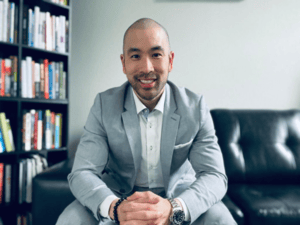
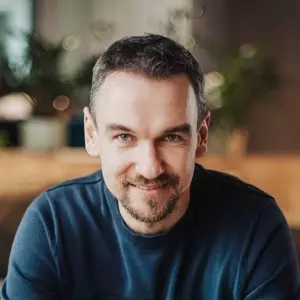
 Dr. Michael Breus, widely known as The Sleep Doctor, is a clinical psychologist, diplomat of the American Board of Sleep Medicine, and a fellow of the American Academy of Sleep Medicine. With over two decades of experience, he’s one of the world’s foremost authorities on sleep and human performance. Dr. Breus is the best-selling author of The Power of When, The Sleep Doctor’s Diet Plan, and Sleep, Drink, Breathe. He's been featured on The Today Show, Oprah, and Dr. Oz, and continues to help high performers unlock their potential through the science of better sleep.




Here’s a glimpse of what you’ll learn:
- Accidental Sleep Science Start:
Dr. Breus stumbled into sleep medicine during residency and quickly became one of its top global authorities. - Sleep Boosts Everything Fast: Improving your sleep delivers near-instant gains in focus, energy, and emotional stability.
- Three True Health Pillars: Sleep, hydration, and breathwork are the non-negotiables that amplify all other wellness practices.
- Sleep Affects Every System: Poor sleep harms metabolism, hormones, immunity, digestion, mood, and even spiritual well-being.
- Blue Light Isn’t Everything:Mental stimulation—not just screen light—is what disrupts your ability to fall asleep.
- Sleep Wins Gold Medals: Elite athletes rely on sleep as a secret weapon for peak performance and faster recovery.
- Alcohol Kills Deep Sleep: Even small amounts of alcohol and overstimulation before bed destroy restorative sleep stages.
- Trackers Show Sleep Trends: Ignore the daily scores—use devices like Oura or Whoop to monitor long-term patterns.
- Habits Improve Sleep Quality: Daily movement boosts deep sleep, while consistent wake times enhance REM cycles.
- Breathe Into Better Sleep: Use the 4-7-8 breath to lower your heart rate and relax into sleep quickly.
- Real Sleep Doctors Deliver: Unlike online gurus, real-world sleep doctors give flexible, personalized strategies that actually work.
In this episode…
- [00:01:14] Dr. Breus’ Origin Story
How a failed sports psychology residency led Dr. Breus to sleep science—and how he discovered its immediate, life-changing power. - [00:03:56] Why Sleep Rules the Body Sleep impacts every organ and disease state, making it the most foundational tool for health and performance.
- [00:08:25] Sleep. Hydration. Breathwork. Dr. Breus’ “triangle model” reveals the three essentials of wellness that outperform supplements, diets, and biohacks
- [00:10:04] Sleep and Health Issues Poor sleep leads to weight gain, hormone imbalances, emotional instability, and even raises Alzheimer’s risk.
- [00:14:25] Deep Sleep = Body Repair Deep sleep triggers human growth hormone and activates the brain’s glymphatic detox system for full-body recovery
- [00:16:14] REM Sleep Explained REM sleep consolidates memory, processes emotion, and serves as the brain’s emotional reset button
- [00:17:26] Lucid Dreaming Technology Explore real devices and supplements that induce lucid dreams—and how Dr. Breus helped pioneer brain-dream communication
- [00:19:30] Heart Rate Over Blue Light It’s not just the screen—elevated heart rate and emotional engagement are the true culprits behind poor sleep onset
- [00:21:08] TV Before Bed? Yes. Why falling asleep with the TV on isn’t as bad as you’ve been told—if you manage your environment correctly
- [00:25:45] Sleep Tracker Truths Sleep trackers like Oura and Whoop aren’t perfectly accurate, but can reveal helpful behavioral trends over time
- [00:28:12] Boost REM & Deep Sleep Daily movement enhances deep sleep, and waking up at the same time each day strengthens your REM cycle.
Resources mentioned in this episode:
Dr. Michael Breus Websites:
https://sleepdoctor.com/
Dr. Michael Breus YouTube: https://www.youtube.com/@TheSleepDoctor
Dr. Michael Breus LinkedIn:
https://www.linkedin.com/in/thesleepdoctor/
Transcription
Hey, this is Riley, host of the Superhuman podcast. At Superhuman, we interview health experts, and show other high performers, and teach our community how to optimize their health, supercharge their performance, and unlock their biological code so they can do more with less. Do you want to fix annoying health issues slowing you down, become a productivity machine, have genius ideas pop into your mind? Stop feeling so stressed, build better relationships, and generate more income. Optimizing your inner machinery can do just that.
Visit [www.getsuperhuman.io] to learn more. My guest today is Dr. Michael Breus. Dr. Breus, widely known as the sleep doctor, is a clinical psychologist, a diplomat of the American Board of Sleep Medicine, and a fellow of the American Academy of Sleep Medicine. He’s one of the world’s leading authorities in sleep, and author of multiple bestselling books, including the power of when frequently guests on shows like Dr. Oz, the Today’s Show, and Oprah. With decades of experience helping people optimize their sleep for better health, performance, and overall vitality, as well as his new book, Sleep, Drink, Breathe, Dr. Breus is here to share his groundbreaking insights on how you too can harness the power of sleep and become your superhuman best.
Dr. Breus, welcome to the show.
Thanks, Riley. I’m stoked to be here.
Yeah, it’s really an honor to have you on. I personally know how important sleep is going through my own journey about 12 years ago with autoimmune disease and how much sleep really contributed to all that. But I’m really curious in your origin story where it all started. What inspired you to become the sleep doctor and kind of draw you in to the science of sleep?
Well, if I’m being honest, it was completely serendipitous. I had no idea I was going to become a sleep doctor, much less the sleep doctor. So I was doing a residency program much like an MD does. You go out into the field for a year and you work with a mentor and you might work at a hospital, you might work at a center, all these different things just to kind of get your clinical skills going. And I was really interested in sports psychology of all things. So I was at the University of Georgia and they have a great division one sports department and I got a chance to do some sports psychology with some of the athletes there. But I couldn’t get into the residency that I wanted to. It was the number one sport psychology residency in the country. So I got into the sleep track instead.
I had worked my way through graduate school in the electrophysiology department. So I’m that kind of guy that likes to take apart machines and put them back together and make sure that they worked okay. And they used the same machines that I knew how to work in the sleep lab. So I figured I would sell myself as a sleep guy and then transfer later. They even told me I had to stay in the sleep lab for at least six months. I thought, how tough can this be? It’s sleep, right? I do it every night. But by the third day, I completely fell in love with clinical sleep medicine.
You change somebody’s sleep and you change their life. It could take weeks, months, even years in clinical psychology to see progress, but in sleep medicine, I was seeing changes on the regular. Sleep affects every organ system and every disease state. Literally everything you do, you do better with a good night’s sleep. And I realized sleep could be a superpower. If you ain’t sleeping, you’re probably not feeling too super.
And I guess for people who are not able to sleep well, how is that actually impacted them mentally and physically?
There’s a whole host of things that happen when you don’t sleep well, both biologically and psychologically. Biologically speaking, you have lowered heart rate variability, higher reaction time, your immune system doesn’t work as well. Literally every organ system doesn’t do well with poor sleep. Your digestion is off, your microbiome is off. So sleep has a huge physical impact.
But mentally, it really beats people up. If you’ve got depression, it gets worse. If you’ve got anxiety, you’re more anxious. Everything seems to amplify. Even spiritually, it becomes harder to feel grounded or connected to anything meaningful. That’s why I wrote Sleep, Drink, Breathe. Sleep, hydration, and breath work are the fundamentals. If you get those three right, everything else becomes easier.
If you’re confused about wellness, you don’t need to overcomplicate it. You don’t need cold plunges or green drinks first. You just need sleep, hydration, and breathing. And even if you’re already doing all the wellness things, none of it works properly if those three are off.
Sleep is the foundation. I know people ask what’s most important between sleep, diet, and exercise, and I’d say sleep sits at the top. When you’re sleep deprived, your metabolism slows down and your appetite increases. Your body thinks it needs to conserve energy, so it pushes you to eat more.
Your hormones also get affected. Leptin, which makes you feel full, goes down, and ghrelin, the hunger hormone, goes up. So you’re hungrier, less full, and your metabolism is slower. That’s why no diet works properly without sleep.
Same with exercise. You need sleep for recovery. If you don’t recover, your performance drops. Sleep also reduces injury risk. When you’re tired, you’re more likely to get injured, and injuries can wipe out months of progress.
During deep sleep, that’s when human growth hormone is released, which helps repair the body. Alcohol disrupts deep sleep, so even if you feel like you slept, your recovery is reduced. There’s also the glymphatic system in the brain that clears waste. Without sleep, those proteins build up, which is linked to diseases like Alzheimer’s.
REM sleep is where emotional processing happens. It helps move memories from short-term to long-term storage. Dreams are part of emotional metabolism. When you don’t process emotions properly, you can wake up with nightmares.
Lucid dreaming is also a skill. It can be trained. I’ve worked on projects where we could even induce lucid dreaming using light cues during REM sleep. It’s fascinating how trainable the brain is in that state.
When it comes to blue light, I want to challenge the myth a bit. Blue light matters, but it’s not the biggest factor. What matters more is engagement. If you’re scrolling, playing games, or emotionally stimulated, your heart rate stays high, and that prevents sleep more than blue light itself.
It’s almost impossible to fall asleep with a heart rate above 60. That’s why I often tell people it’s okay to fall asleep with the TV on if it helps you relax. Sleep is flexible. It’s not about perfect rules.
Sleep trackers also aren’t very accurate. They’re best at detecting when you fall asleep and wake up, but not deep sleep stages. Use them for trends, not exact numbers. What matters is patterns, not single-night data.
The best way to improve sleep is simple: exercise daily and wake up at the same time every day. That consistency improves your circadian rhythm and can improve sleep quality significantly.
You can also identify your chronotype—whether you’re a lion, bear, wolf, or dolphin. When you align your sleep schedule with your chronotype, your sleep quality improves and you may even need less sleep.
Supplements aren’t the first solution. Check blood work first. Fix deficiencies like vitamin D or iron before adding anything else.
One of the most interesting devices I’ve seen is the Apollo, which uses vibration to activate the parasympathetic nervous system and help you relax. There’s also emerging tech in sleep tracking that’s improving, but we’re still learning.
Finally, sleep also affects the microbiome, inflammation, and even gut health. Sauna and exercise can improve sleep, but timing matters. Too close to bedtime, and it can raise body temperature and delay sleep onset.
If you want to improve sleep, consistency is everything. Wake up at the same time every day, and your body will naturally adjust.
Sleep is one of the biggest performance enhancers we have. If you want to be superhuman, you need super sleep.
When it comes to going deeper into sleep tracking and optimization, most devices aren’t very accurate. Even the best ones are only about 80–85% accurate compared to clinical sleep studies. They’re mainly good at telling you when you fall asleep and wake up, but not the exact sleep stages.
That’s why you shouldn’t focus on exact numbers. Focus on trends instead. If one night your deep sleep looks low, but it’s always low or always similar, that’s just your baseline. What matters more is when your patterns change significantly, because that usually reflects behavior changes.
If you want to improve sleep quality, daily exercise is one of the most effective tools, especially for deep sleep. For REM sleep, the biggest factor is waking up at the same time every day, even on weekends. That consistency helps regulate your melatonin cycle and improves sleep timing.
When you wake up consistently, your body sets a rhythm. Melatonin turns on and off at predictable times, which naturally improves both sleep onset and sleep quality. A lot of people lose REM sleep simply because they wake up at different times and miss the final sleep cycles.
Chronotype also plays a big role in sleep performance. Some people are lions, bears, wolves, or dolphins depending on their natural biological rhythm. If you align your sleep schedule with your chronotype, your sleep becomes more efficient and you may not even need as many hours.
You can even take a chronotype quiz to understand your natural sleep pattern. Over time, your chronotype can shift depending on age and life stage, but it tends to stabilize in adulthood.
In terms of advanced biohacking, most supplements are not the first answer. It’s better to check for deficiencies like vitamin D, iron, magnesium, or omega-3s first. Fixing those will often improve sleep more than adding random supplements like ashwagandha.
One of the most interesting technologies for sleep is the Apollo device, which uses vibration to help activate the parasympathetic nervous system and promote relaxation. There are also newer sleep tracking tools emerging that can even approximate full sleep studies at home.
Functional medicine and gut health also play a role in sleep. The microbiome follows a circadian rhythm, and poor sleep disrupts gut bacteria balance. On the other hand, sauna and exercise can improve sleep quality, but they should be done a few hours before bed, not right before sleeping, because they raise core body temperature.
Cold plunges are more mixed—some people find them stimulating rather than calming, so timing and individual response matter.
Ultimately, sleep isn’t something you “optimize” perfectly because it naturally fluctuates. Instead, you improve its consistency and quality over time through habits.
If you want to be superhuman, sleep is the foundation. Everything else—diet, exercise, supplements—works better when sleep is in place.
You can learn more at the sleepdocctor.com. There’s also chronoquiz.com to find your chronotype, and yoursleepcoach.com for coaching and resources.
You can learn more at the sleepdocctor.com. We also have all the social properties—TikTok, where I do a tremendous amount of videos because it’s a medium where there are a lot of young people on there and they don’t know how to sleep, so I want to try to educate them.
If you get a chance, check out chronoquiz.com. That’s where you can learn what your chronotype is. And if for some reason you actually wanted to reach out to me, my personal website is yoursleepcoach.com.
Amazing. We’ll put all that down in the show notes below. Thank you so much. I learned a ton today and I know our audience did too.
Sure. Buy my book. Buy the book. Yes.
Sleep, Drink, Breathe.
Sleep, Eat, Breathe. Sleep, Drink, Breathe. Sorry. Drink, Breathe. Yeah, we’ll definitely put that in the show notes below. That sounds like a must-read as well as all your other ones. It’s a lot of good information.
So thank you once again, and thank you everybody for listening today. If you’d like to learn more about how to become superhuman and get our free superhuman guide, visit getsuperhuman.io.
Until next time—sweet dreams.
Sweet.