

Depression and insomnia are tightly linked: depression often disrupts sleep, and long-term insomnia roughly doubles the risk of developing depression later. Because the link runs both ways, treating insomnia can help mood, and treating depression does not always fix sleep. CBT-I, the first-line treatment for chronic insomnia, reduced depressive symptoms in trials of people with both problems. Depression can also cause early waking, trouble falling asleep, or sleeping too much. If low mood lasts two weeks or more, tell a clinician; do not wait for sleep to improve first. If you have thoughts of suicide, call or text 988 in the US or seek emergency help now. Keep antidepressants and sleep medicines under your prescriber’s guidance. This is educational information, not medical advice.
How are depression and insomnia linked?
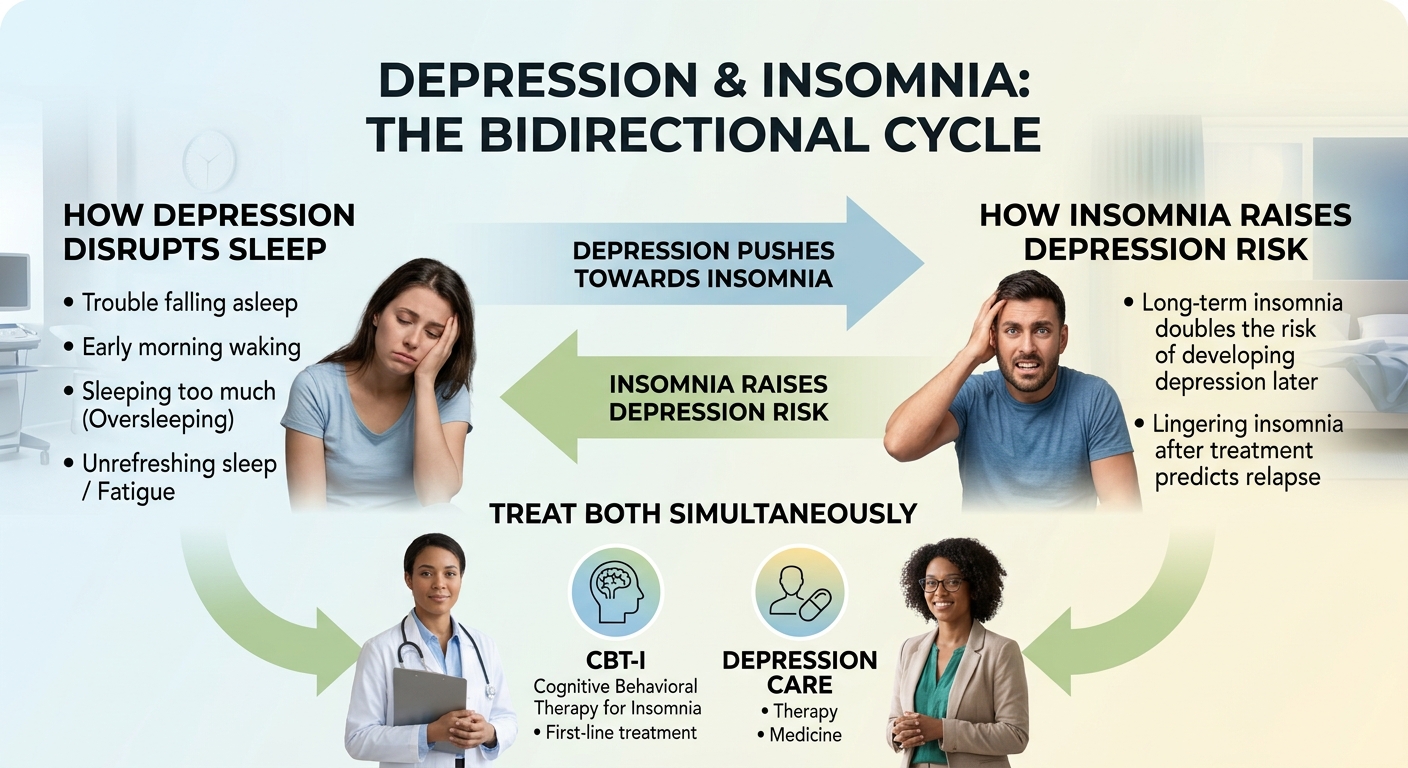
The link runs in both directions. Depression can disrupt sleep, and insomnia can raise the risk of depression.
In a meta-analysis of long-term studies, people with insomnia had about twice the chance of developing depression. Insomnia is also considered a well-defined and modifiable risk factor for depression. In the other direction, insomnia symptoms often remain after depression treatment, and lingering insomnia is linked to shorter remission and a higher risk of relapse.
Here is how depression can change sleep:
- Trouble falling asleep.
- Waking in the night, or too early. The research on early waking and depression is mixed. See waking up too early.
- Sleeping too much. Some people with depression sleep more than usual.
- Unrefreshing sleep and daytime fatigue.
Patterns differ from person to person, and these changes are common but not universal.
Does insomnia cause depression?
It can raise the risk, but it is not the only cause, and most people with insomnia do not develop depression. The evidence comes mainly from observational studies and from trials of treating insomnia.
Two trials suggest that treating insomnia may help prevent depression:
- A large trial of about 1,149 adults with insomnia and mild depressive symptoms found that an online CBT-I program reduced depressive symptoms, suicidal thoughts, and anxiety compared with a placebo program.
- A 2022 trial in older adults found that CBT-I led to more remission of insomnia than a sleep education program (51% versus about 38%). Among those whose insomnia went into remission, 5% in the CBT-I group developed a later episode of major depression, compared with 19% in the comparison group.
These results are encouraging, but they are not a guarantee, and they apply to specific groups.
Does treating insomnia help depression?
Often, yes, to a moderate degree. It is not a replacement for depression treatment.
- A 2023 meta-analysis of digital CBT-I trials in people with insomnia and depression found larger improvements in insomnia (standardized effect −0.85) and moderate improvements in depression (−0.47) in the short term.
- Earlier meta-analyses found moderate effects of insomnia treatment on depressive symptoms (effect sizes of about 0.34 to 0.36).
- In a randomized trial of guided online CBT-I in people with both insomnia and depressive symptoms, depressive symptoms were lower than in a sleep-diary comparison group (effect size 0.76).
- A 2017 trial in the journal Sleep compared CBT-I plus an antidepressant against treatments aimed at only depression or only insomnia. The authors noted that CBT-I alone also reduced depression, and suggested its antidepressant properties deserve more study.
Still, researchers note that few studies have tested CBT-I as a stand-alone treatment for people with both problems, and they mostly involve mild to moderate symptoms. Read about CBT-I.
What should you do if you have both depression and insomnia?

Bring both to a clinician, and treat them together. Here is a practical order:
- Tell your clinician about both your mood and your sleep. They can assess for depression and look for other causes of poor sleep.
- Get care for depression. Therapy, medicine, or both are options. Do not wait for sleep to improve first, because insomnia often lingers after depression treatment.
- Add CBT-I. It is the first-line treatment for chronic insomnia, and it can be delivered in person or through an evidence-based digital program. If you also have a mood disorder such as bipolar disorder, ask a clinician how CBT-I should be adapted.
- Keep a regular schedule and get morning light. See morning sunlight and sleep.
- Be careful with alcohol and sleep medicines. Review medicines with your prescriber, including how any antidepressant affects your sleep. See our guide on trazodone for sleep.
- Track both. Note your sleep and your mood for a couple of weeks, and bring the notes to your appointment.
- Build in support. Tell someone you trust how you are doing.
For the anxiety side, read anxiety and insomnia.
If you are having thoughts of suicide

Sleep problems are linked with suicidal thoughts and behaviors, so please take them seriously. If you are thinking about ending your life or hurting yourself:
- In the US, call or text 988 (Suicide and Crisis Lifeline) at any time, or call 911 if you are in immediate danger.
- Outside the US, contact your local emergency number or crisis line.
- Reach out to someone you trust, and do not stay alone.
You do not need to wait for sleep to improve, and help is available now.
Living with low mood and poor sleep, and not sure where to start? A clinician should lead depression care. If you’d like help with the sleep side, book a consultation and we’ll work alongside your care team.
What the Research Shows
Insomnia is a risk factor for depression. A 2011 meta-analysis of longitudinal studies by Baglioni and colleagues found that people with insomnia have about twice the chance of developing depression. Researchers also note that insomnia symptoms commonly persist after depression treatment and predict shortened remission and relapse, and that insomnia is a modifiable risk factor.
CBT-I reduces depressive symptoms. A 2023 systematic review and meta-analysis in PeerJ of randomized trials of digital CBT-I found that it reduced insomnia severity (standardized mean difference −0.85) and depression (−0.47) in the short term. A 2019 trial in Psychological Medicine in people with insomnia and depressive symptoms found less depression after guided online CBT-I than in a sleep-diary condition (effect size 0.76). Earlier meta-analyses reported moderate effects on comorbid depressive symptoms.
Combining treatments is being tested. In a 2017 randomized trial in Sleep, participants were assigned to an antidepressant plus CBT-I, CBT-I plus a placebo pill, or an antidepressant plus sleep hygiene. The authors noted that an antidepressant effect in the CBT-I-only group has been reported in other studies, suggesting that CBT-I’s antidepressant properties deserve further investigation.
Prevention data are promising but limited. In the 2016 Lancet Psychiatry trial of about 1,149 randomized adults with insomnia and mild depressive symptoms, online CBT-I reduced depressive symptoms compared with a placebo module. A 2022 trial in older adults reported that sustained insomnia remission after CBT-I was linked to lower rates of later major depression. These trials mostly involved milder symptoms, so they do not show that CBT-I can replace depression treatment.
This article is for education only and is not medical advice. Talk with a qualified clinician about your own sleep, health conditions, and medications.
If you would like to see how we might be able to help you with this deeper, schedule a free consult here.
Want a hand with the sleep side of recovery?
Join The Sleep Nirvana Club, our free sleep course and community: Join the free sleep course and community.
When to Seek Professional Help
- If you have thoughts of suicide or self-harm, call or text 988 in the US, call your local emergency number, or go to the nearest emergency department. Do not wait.
- You have low mood, loss of interest, or hopelessness on most days for two weeks or more. See a clinician.
- You have trouble sleeping at least three nights a week for three months or more. Ask about CBT-I.
- You have changes in appetite, concentration, or energy along with poor sleep or early waking.
- You are using alcohol or sleep medicine to cope, or you have unusual energy with little need for sleep for days or severe mood swings. These need prompt attention from a clinician.
Frequently Asked Questions
Can depression cause insomnia?
Yes. Insomnia is a common symptom of depression, and many people with depression have trouble falling asleep, wake during the night, or wake too early. Some people sleep too much instead. Sleep problems can also persist after depression improves, and lingering insomnia predicts relapse. If you have low mood and poor sleep, tell a clinician about both, because treating depression alone does not always fix sleep.
Can insomnia cause depression?
It can raise the risk. A meta-analysis of long-term studies found that people with insomnia had about twice the chance of developing depression. Insomnia is considered a modifiable risk factor, and a 2022 trial in older adults found fewer depression episodes after insomnia remission with CBT-I. These are associations and trial results, and many people with insomnia never develop depression. Treating insomnia is still worthwhile for both sleep and mood.
Does treating insomnia help depression?
Often, yes. Trials of CBT-I in people with both problems found reductions in depressive symptoms, and a 2023 meta-analysis of digital CBT-I found moderate improvements in depression as well as larger improvements in insomnia. One trial reported a large effect on depressive symptoms compared with a sleep-diary control. CBT-I is not a replacement for depression treatment, so use it alongside care from a clinician.
Why do I wake up so early when I’m depressed?
Early morning waking is a common complaint in depression, but the research is mixed. One study linked it to depressed mood over time, while another in older adults found that it did not predict later depressive symptoms, unlike poor sleep quality and trouble falling or staying asleep. It also has many other causes, such as sleep apnea and alcohol. If you wake early and feel low, tell a clinician.
What should I do if I have both depression and insomnia?
Tell your clinician about both, and do not wait for sleep to improve before getting depression care, because insomnia often lingers after depression treatment. Ask about CBT-I, the first-line treatment for chronic insomnia, alongside therapy or medication for depression. Keep a regular schedule, get morning light, and be careful with alcohol and sleep medicines. If you have thoughts of suicide, call or text 988 in the US or seek emergency help right away.
When to Work With a Sleep Consultant
We do not diagnose or treat depression, and a clinician or mental health professional should lead that care. What The Sleep Consultant can do is work alongside them. We look for the root causes of your insomnia, such as your circadian rhythm, stress response, hormones, gut, or nutrient status, and help you build the non-drug sleep skills that support recovery.


