

Often yes, when a licensed clinician delivers it. Insurers usually treat CBT-I as outpatient behavioral health care, so it falls under your plan’s mental health benefit. Medicare Part B may cover it when a covered provider says it is medically necessary, though sources describe the details differently. Digital CBT-I coverage is growing but patchy. Sleep coaching from an unlicensed consultant usually does not qualify for insurance. Coverage depends on your plan, provider, and state, so call your insurer before you start. This is educational information, not medical advice or insurance advice.
Short answer (40-60 words): CBT-I from a licensed clinician is usually billed as behavioral health and often covered. Medicare Part B may cover it when medically necessary. Some digital CBT-I programs have billing codes, but coverage varies. Coaching from an unlicensed consultant usually is not covered. Always confirm benefits with your plan before your first session.
What Do Insurers Usually Cover?
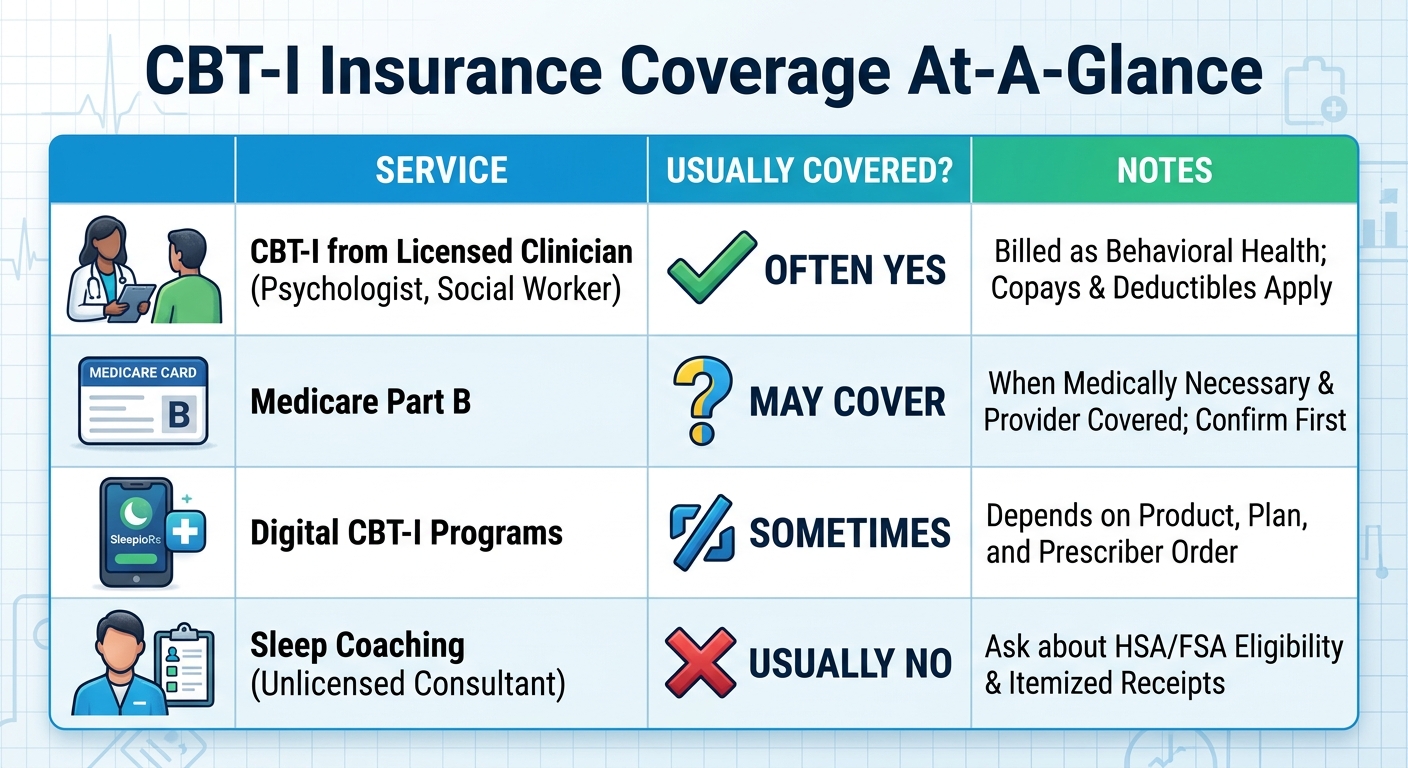
| Service | Usually Covered? | Notes |
|---|---|---|
| CBT-I from a licensed clinician (psychologist, clinical social worker, trained physician) | Often yes | Billed as outpatient behavioral health; copays and deductibles apply |
| Medicare Part B | May cover | When medically necessary and delivered by a covered provider; confirm with Medicare and your provider |
| Digital CBT-I programs | Sometimes | Depends on the product, your plan, and a prescriber’s order |
| Sleep medications | Usually, under pharmacy benefits | Medicare Part D or a plan formulary |
| Sleep study for suspected sleep apnea | Often, when medically indicated | Medicare generally does not cover sleep studies for insomnia alone |
| Sleep coaching from an unlicensed consultant | Usually no | Ask about HSA/FSA and receipts |
Why Is CBT-I Billed as Behavioral Health?
CBT-I is a course of psychotherapy. A licensed clinician, often a psychologist trained in behavioral sleep medicine, delivers it. Plans therefore process it through the same benefit as other outpatient therapy. Billing usually uses standard psychotherapy codes alongside an insomnia diagnosis. Federal mental health parity rules generally require plans that cover medical care to cover behavioral health comparably, though the details depend on your plan.
The American Academy of Sleep Medicine and the American College of Physicians both recommend CBT-I as first-line treatment, which supports medical necessity. Our CBT-I guide explains the evidence.
What About Medicare?
Sources disagree on how clearly Medicare covers CBT-I. Several explainers say Part B covers CBT-I when it is medically necessary and delivered by a covered provider, such as a psychologist or clinical social worker. Another says Medicare may not cover therapies like CBT-I for insomnia. Both agree on three points: you should confirm with Medicare and your provider before starting, out-of-pocket costs apply under Part B, and Medicare Advantage plans may add behavioral health benefits. Medicare generally covers prescribed sleep medications through Part D and covers sleep studies when a doctor suspects sleep apnea, but not for insomnia alone.
Does Insurance Cover Digital CBT-I?

Sometimes. Beginning January 1, 2025, Medicare created digital mental health treatment billing codes. According to industry coverage, clinicians can bill them for FDA-cleared devices such as SleepioRx, with a monthly management code for clinician oversight. That arrangement requires a prescriber, so you cannot simply download the app and bill Medicare.
Private coverage varies. Some insurers cover digital CBT-I through behavioral health or pharmacy-style authorizations, and some employers offer programs free through wellness benefits or an employee assistance program (EAP). The prescription program Somryst has a reported retail price near $900 for a nine-week course, and its availability has shifted since its original maker went bankrupt in 2023, so confirm it is currently offered before you plan around it.
If your plan does not cover a digital program, check free options. The VA’s Insomnia Coach app is free for anyone, and some health systems and employers provide programs at no cost. See our online sleep coaching guide for how to judge program quality.
What About Sleep Coaching and Consulting?
A sleep consultant or coach usually is not a licensed healthcare provider, so insurers typically do not reimburse the service. A few things can still help:
- Ask the consultant whether they accept insurance or provide itemized receipts.
- Ask your HSA or FSA administrator whether the service qualifies. Therapy from a licensed professional for a medical condition is generally an eligible medical expense, but unlicensed coaching may not be. Some administrators request a letter of medical necessity from your doctor, so ask before you pay.
- Compare the cost with covered alternatives. See our cost guide.
If your insomnia has lasted three months or longer, a licensed CBT-I provider may cost you less out of pocket than a coach. Our guide on how to find a qualified specialist lists directories and credentials to check. Many people combine both: CBT-I through insurance, plus coaching for habits and accountability.
What Should You Ask Your Insurer?

Call the number on your card and ask:
- Does my plan cover outpatient behavioral health or psychotherapy, and what are my copay and deductible?
- Is CBT-I covered when billed with an insomnia diagnosis?
- Do I need a referral or prior authorization?
- Are telehealth visits covered at the same rate as in-person visits?
- Is my provider in network? If not, what are my out-of-network benefits?
- Does my plan cover any digital CBT-I program, and does it require a prescription?
- Is there a visit limit per year?
- Can I use my HSA or FSA for this service?
Write down the date, the representative’s name, and a reference number. Then ask your provider what codes they will bill.
What the Research Shows
CBT-I is first-line care. The AASM and the American College of Physicians both recommend CBT-I first for chronic insomnia, which supports coverage as medically necessary treatment.
Coverage usually runs through behavioral health. Multiple coverage guides describe CBT-I from a licensed clinician as outpatient psychotherapy billed with an insomnia diagnosis.
Digital coverage is growing, with gaps. Medicare introduced digital mental health treatment codes in 2025, and private coverage varies by product and plan.
Sources conflict on details. Medicare guidance varies across explainers, which is why you should confirm benefits with your plan and provider.
This article is for educational purposes only and is not a substitute for personalized medical advice, diagnosis, or treatment. Coverage varies by plan and changes often.
If you would like to see how we might be able to help you with this deeper, schedule a free consult here.
Want a Free Starting Point?
Join the free sleep course and community: Join the Sleep Nirvana Club
When to Seek Professional Help
- Your insomnia has lasted three months or longer
- You snore loudly, gasp, or feel very sleepy during the day
- Cost is stopping you from getting any care
- You rely on sleeping pills or alcohol most nights
- Low mood or anxiety comes with poor sleep
Frequently Asked Questions
Does insurance cover CBT-I?
Often. Insurers usually bill CBT-I from a licensed clinician as outpatient behavioral health care. Copays, deductibles, and network rules still apply, so call your plan before you start.
Does Medicare cover CBT-I?
Sources say Medicare Part B may cover CBT-I when it is medically necessary and delivered by a covered provider, but explainers differ on the details. Confirm with Medicare and your provider before your first session.
Does insurance cover digital CBT-I apps?
Sometimes. Medicare introduced digital mental health treatment billing codes in 2025 for FDA-cleared devices, and some private plans and employers cover programs. A prescriber’s order is often required, and coverage varies by product and plan.
Is sleep coaching covered by insurance?
Usually not, because coaches and consultants are typically not licensed healthcare providers. Ask the consultant about receipts, and ask your HSA or FSA administrator whether the service qualifies.
Can I use my HSA or FSA for CBT-I?
Therapy from a licensed professional for a medical condition is generally an eligible expense. For coaching or a digital program, ask your administrator before you pay, since rules differ.
When to Work With a Sleep Consultant
Insurance can lower the cost of CBT-I, and coaching can add support for habits and accountability. If you want help working out which combination fits your situation and budget, we can help.


