

Here’s a glimpse of what you’ll learn:
-
1. How to recharge your battery fast: How to shift your body into a parasympathetic state for improved sleep, recovery and stress management.
2. Improving wearable device scores: How using tech can improve sleep scores and heart rate variability (HRV) in just a few sessions.
3. Pushing past your genetic limitations: How to become a high performer more efficiently and effectively.
4. Recovering from disease: How Neufit can possibly help regenerate nerves for diabetic neuropathy sufferers.
In this episode…
We dive deep into the world of tech and sleep with with guest Garrett SalPeter into the science behind how the Neufit device and how it’s able to re-educate the nervous system on a neurological level. Garrett provides insights from his extensive experience applying New Fit modalities with athletes, medical patients, and high performers. He discusses real-world case studies of people who achieved faster recovery times and improved performance outcomes using Neufit. Garrett also shares his vision for advancing personalized treatment protocols utilizing biometrics data to track wellness metrics. You’ll learn about Neufit’s ongoing research projects, including a groundbreaking study on using Neufit to help regenerate nerves for diabetic neuropathy sufferers. Garrett expresses his enthusiasm for the potential of Neufit to transform the lives of millions suffering from this debilitating condition. He also discusses Neufit’s applications for boosting physical performance, mental acuity, and stress resilience in high-achieving individuals.
Resources mentioned in this episode:
Immunolytics website (immunolytics.com) for DIY mold test kits, educational materials, and expert consultation.
Phone number 505-217-0339 to contact Immunolytics with mold-related questions
For more on how to improve your sleep and overall performance, visit www.thesleepconsultant.com
Transcription
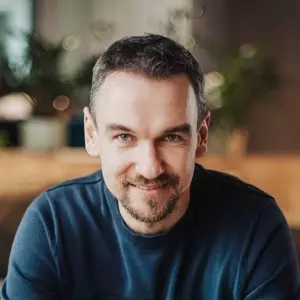
(0:00) Welcome to the sleep experience podcast, where we take a deep dive into the latest sleep hacks, (0:08) gadgets and strategies to skyrocket your productivity to new heights. Being a high(0:14) performer is all about resting at 100% so you can execute at 100%. (0:29) Hey, this is Riley, host of the sleep experience podcast.
If you want to become a productivity (0:44) machine, have genius ideas on my way, pop into your head, stop feeling so stressed, (0:48) build better relationships and generate more income. Optimizing your deep sleep can do just (0:52) that. Visit www.thesleepconsultant.com to learn more.
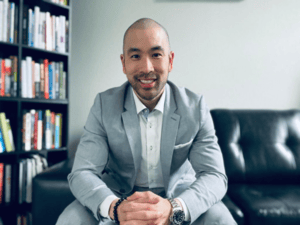
My guest today is Garrett Salpeter, (1:00) known as the health engineer. Garrett has taken his training in engineering and neuroscience and (1:05) used it to create NuFit and the patented NuBeat device to train doctors, therapists and professionals, (1:11) sports teams and universities, and how to apply NuFit with the patients and athletes, (1:16) helping them recover faster from injury and optimize performance. He is the best-selling (1:20) author of the book, The NuFit Method.
Garrett, welcome to the show. (1:24) Riley, thanks for having me. It’s great to be here.
(1:26) Yeah, it’s an honor to have you on. And I keep hearing, I do a lot of these podcasts with people (1:32) in the biohacking space, and it’s really interesting that NuFit, NuBeat, these always(1:38) come up each conversation. I think it’s really been monumental to a lot of people in helping(1:42) them recover with their physical performance.
But I’m always curious with each guest that (1:46) comes on the show, where does your journey all start with this? What was that origin story for (1:50) you? It was really like a perfect storm or a perfect Venn diagram overlapping of where my (1:59) interests and passions all met. So I was both a serious engineering student in college and also (2:06) an ice hockey player. I was playing Division III hockey mostly even then as a practice squad, (2:12) so I was never at risk of making the NHL, but I loved it nevertheless.
And it was kind of my entry (2:17) point into physiology and training, and just really became super passionate about the human (2:23) body. But also I had this engineering, and I thought I was going to be in engineering, (2:29) go on and do that probably professionally. And I had an experience when I was playing college (2:34) towards the end of my time there where I had an injury.
I had some torn ligaments, (2:38) and I was supposed to have surgery and be out for a few months. And I met a doctor who was (2:43) doing functional neurology and using older versions of direct current. And working with (2:51) this doctor, it was amazing because it was just unlike anything else I had done before.
(2:54) With the functional neurology, we were looking at the neurological response to injury about how (2:59) the brain and nervous system will shut down certain muscles and brace and guard with others. (3:04) And create hypersensitivity and pain and all these different things. And then with direct current, (3:08) we could see how applying these electric fields could actually influence the healing process.
(3:13) And going through this series of treatments, I was just blown away. I was so excited because(3:20) as a hockey player, I was able to get back on the ice faster. I avoided surgery.
I was back (3:24) in weeks instead of months. So that was exciting. But what got me even more fired up was as an (3:33) physics major, pre-engineering student, to find something that made sense scientifically from (3:38) first principles.
It was just so much different than any of the other physical therapy or (3:43) orthopedic medicine experiences I had before. And it just made sense in such a way that going (3:48) through that, I felt called to share the experience with as many people as I could. (3:52) And that ultimately set me on this path.
That’s incredible. I’m sure your brain lit (3:56) up and your eyes widened. And that’s the path that you want to take and keep going down it.
(4:01) I think that’s fascinating. And how many years ago would that have been? (4:04) So that, I guess I’m dating myself. It was my last year in college.
So 16, 17 years ago. (4:11) Wow. And then fast forward till today, could you talk a little bit about what you’re doing now and (4:17) the kinds of people that you’re helping? Yeah, absolutely.
So along the way, (4:21) I had actually used that older analog direct current devices with analog dials and things (4:29) like that. And for about seven or eight years, I actually started originally out of a chiropractor’s (4:34) office. Then we spun off our own thing, started a clinic here in Austin, Texas, (4:39) and was working with, initially it was people like me, athletes trying to recover faster(4:43) and then push the limits of fitness and performance.
And there’s applications because (4:48) we’re working neurologically, working with the nervous system. So that controls so many things. (4:51) There’s a whole breadth of applications, but over that.
And then since we were working (4:58) neurologically, every once in a while, someone would be like, Hey, can you help my friend or (5:03) grandparent who had a stroke? Or, Hey, I know someone who has spinal cord injury. And so we (5:06) started working with different people who have more of those neurological things. And then (5:11) eventually I kept seeing so many ways to improve the technology and bring it into the future.
And (5:19) finally decided to work with another team of engineers to create the newbie and launch that. (5:23) That trend has now continued of working with all this whole different swath of people with all (5:29) different types of challenges and circumstances. So it’s able to work with people recovering from (5:35) sports injuries, recovering from orthopedic surgery, recovering from trying to restore (5:38) function or recover after stroke, spinal cord injury, MS, neuropathy, and then looking at (5:44) fitness performance and optimization.
There’s also one protocol that we have that’s super (5:49) relevant for, for sleep, for your favorite topic here, you know, for shifting the body into a more (5:54) parasympathetic dominant state, helping with recovery. And we see improvements in sleep (5:58) scores on various wearable devices when we do that and clinical, clinical grade, heart rate (6:03) variability measurement too. That’s incredible.
Yeah. That’s when you can, when you track it (6:07) objectively like that, I mean, it’s, especially when you have an aura ring or the Apple watch (6:11) and some of these other trends, it’s amazing when people see their own scores go up as a coach, (6:15) your job becomes a lot easier because it’s the numbers speak for themselves. It kind of becomes (6:18) coaching tool, but that’s amazing.
But the newbie is able to do there. Can you explain a little bit (6:24) about the technology and how it works when someone comes to see you? Yeah. So there’s the biggest (6:31) differentiating factor is, is the fact that it’s direct current instead of alternating current.
(6:37) And people might see a device and say, Oh, there’s pads. You know, I’ve used that at my(6:41) chiropractors or my physical therapist office or in the athletic training room. I’ve seen that(6:46) before.
I know what it can do. There’s not very much in such a crowded space. Why would you need(6:50) another electrical device out there? And the answer is, well, virtually everything else that’s(6:55) out there is alternating current.
And this is direct current and has some, some meaningful (7:00) differences. And so then you might ask, well, why is that? Why are, you know, why are most things (7:06) alternating current if there’s such a difference? And there’s actually an interesting history too, (7:09) if I can touch on that for just one moment, which is a lot of these benefits of direct current, (7:14) which we’ll get to these benefits of direct current were known, but there was historically (7:18) one big problem, which is when you turn it up to a high enough level to make a difference in the (7:23) body, you actually would burn the skin. And so the Soviet sports scientists in the sixties and (7:29) seventies, they would literally burn their athletes and they could do that for mother Russia, (7:33) but like, we couldn’t do that over here.
Right. So, yeah. So they, you know, over here, (7:43) for that reason, direct current, essentially it was a case of the baby being thrown out with the (7:47) bath water, direct current was thrown out in its place, came alternating current.
And there are (7:52) some benefits to alternating current devices. You can apply electric, electric signals and get some (7:56) muscles to pulse and move and things like that. But, but you’re limited both in what you can do (8:01) for the healing process and in the realm of neuromuscular reeducation, which means essentially (8:07) reprogramming the body, the nervous system specifically to, to move better, to engage (8:11) muscles for better strength, range of motion, coordination, balance, et cetera.
So, so the newbie (8:18) and direct current allow us to, to have really two main categories of benefits that you don’t get (8:23) with traditional devices. And one is that effect on neuromuscular education, because we can bypass (8:29) a lot of the, not only the muscle contractions, but the protective co-contractions, alternating (8:34) current, the signal goes back and forth, back and forth. So you end up training muscles on both (8:38) sides of joints to fight against each other because you get that signal front, back, front, (8:42) back, or a positive, negative, positive, negative.
So, so it’s like training the body to move as if (8:46) you were hitting the car, or if you were driving your car and hitting the throttle and the brake (8:49) pedal at the same time, you’d be like fighting your own internal resistance. So there’s some (8:54) limitations there. So we can bypass a lot of that and just speak more directly to the nervous system.
(8:58) And so one of the things we can do, for example, is actually scan around. I don’t know if anyone, (9:02) you know, if you’re listening, you don’t see this, but if I’m scanning around with a electrode on my, (9:06) on my shoulder here right now, so we can send that, that feedback, send that signal and find (9:12) very precisely where the nervous system is, is imposing these protective patterns on the body. (9:18) Cause it’s, it’s not necessarily about the, what happens to us, the initial injury, as much as it (9:23) is the response to that injury.
That’s why it takes so long to recover. Why it takes extra (9:27) weeks or months to recover from sprains, strains, tears, surgeries, et cetera. And so we can find (9:33) where that response is and rapidly retrain or re-educate that.
So, so over 90% of patients (9:39) notice progress in their first session on the device because that direct current, it’s basically (9:43) like a software debugging allows us to find where those issue issues are. And then fortunately that (9:48) also supports the long-term trajectory of healing. And we get to take advantage long-term of those (9:54) direct current electric fields that like I talked about with my torn ligaments, that, that electric (9:58) field gradient helps orient and optimize the function of all the cells that control healing (10:03) of various tissues of the body, bone muscles, tendons, ligaments, nerves, et cetera.
All those (10:08) will, will heal better under the influence of that current too. So there’s, there’s multiple (10:13) benefits there and it definitely stands out within the, within the electrical field.(10:19) Yeah, no kidding.
And it’s amazing how it provides that like one session relief care. (10:24) And then you have that acute care of whatever that injury or, you know, that, that pain or (10:29) whatever that thing is that people are experiencing, you’re really getting to the root (10:33) cause of that and healing that source as well. And it’s, I love how it’s all kinds of people.
(10:37) You have high performers where time is money and they need to recover in a short period of time. (10:41) I like to talk a lot about, about passive recovery and active recovery. You can do that passive (10:46) recovery and it takes longer, or you can just do the active recovery and just, just such a short (10:50) period of time.
You have that now new opportunity cost of other things you can do, whether it’s (10:55) your business or physical performance and things like that. So I find that’s amazing. What if, (11:00) what kind of I know you used to, you touched on, you work with all kinds of people with this (11:06) specifically the high performers, what is the, is it more injury risk or do they come to you (11:12) feeling fine and they’re just looking to improve their maybe muscle reaction time or overall (11:17) performance? What does that kind of look like on that kind of top 10%? (11:22) So there’s, I mean, I’d say there’s kind of two categories.
There’s the high performing (11:26) athletes and then there’s the high performing, you know, executives, leaders, people that, (11:32) that aren’t, they’re not getting paid for, for their physical performance or getting paid for (11:35) their mental performance, but they still want to, you know, perform at that level and treat (11:40) themselves like athletes too. So in, in both cases, you know, we certainly, if people do get injured, (11:46) being able to help them recover just much faster, more efficiently and effectively (11:51) is, is certainly a value proposition. But then we think about what we can do (11:57) once they’ve healed or if they’re not injured at all, what, what can we do(12:00) to optimize their training to make it, make it more effective? You know, so then it’s looking(12:06) at goals.
We can use this cause there’s a, you know, if we want to program someone nervous system (12:10) to be faster or stronger or to improve their balance you know, we can, we can do that. We can,(12:18) we can train faster coordination and relaxation of opposing muscles. If we’re working on speed, (12:23) we can train greater recruitment of muscles.
So you teach someone that the neurological skill (12:29) of strength, which means the neurological skill or signal to contract more of your available muscle (12:35) at the same moment in time. And so the, you know, there’s, there’s all these different things that (12:40) we can train to make training more like the training of the future. There’s more precise (12:47) dialed in, less wasted time, more bang for the buck, better ROI.
And then there’s also, (12:52) there’s also the, the, you know, the downside of being like super hard charging type A, (12:56) whether it’s the athlete with a grueling schedule or the executive athlete who also has a grueling (13:02) schedule and other demands, you know, being able to do, for example, what we call the master reset, (13:08) which is our electronic meditation where, you know, someone will actually lie down, you know, (13:14) for as little as 10 minutes, maybe up to 20 minutes. And that, you know, if you think about (13:18) just doing a guided breathing exercise, for example, you know, diaphragmatic breathing for (13:23) that period of time will increase heart rate variability to some degree, but if you do it (13:27) with the pads set up, so it’s basically just pads, some pads on the neck, pads on the feet, you, (13:31) you sit or lie down, ideally lie down flat or in a reclining chair and have this going. (13:36) And we’ll see that, you know, measured with clinical heart rate variability measurement (13:42) devices.
We’ll see, you know, this, this, the benefits someone will get in heart rate variability (13:47) from acupuncture or deep breathing will be, will be good. But when we add this, it’s like (13:52) three or four or five times more significant. So training people to be able to get into that (13:59) recovery state, it has acute benefits.
And when we do it more often, it has cumulative benefits (14:04) on sleep and helping people recover. So some of it is performing better and getting more bang for (14:09) the buck in those sessions. And some of it is, is getting into the place where we can recover (14:14) more effectively so that we can go out and do it again, because so much of being a high performer (14:18) is the consistency of being able to do it right over and over and over again.
And, you know, (14:24) sometimes getting to the top is a war of attrition. It is. Yeah.
Yeah. It’s a, yeah. Once (14:29) you get up to the top, it’s, it’s definitely a different climate.
No, I find that’s incredible. (14:33) And that, you know, that efficiency and people’s ability to really train that it’s, it’s almost (14:38) something too, you don’t know until you try and you like, what does better heart rate variability (14:42) feel like? And what is better recovery and stuff like that feel like I got my first dose of it (14:47) in Victoria and also Santa Monica. They had the bulletproof upgrade labs and I don’t think they (14:52) had your device, but you know, like the pimp machines and these other ones, like you can (14:56) really beyond just going to the doctor and getting a prescription, you see this whole other world of (15:02) biohacking and just what the future holds with all that technology.
I think it’s fascinating. (15:06) And the newbie is, you know, it’s kind of a frontier along, along that I think is truly (15:10) incredible. So the newbie can help people sleep better with better sleep comes better recovery.
(15:16) Could you touch on a little bit about sleep and how the newbie, I know you touched on a little (15:22) bit about before, but how the newbie can help sleep better. And if you know anything about (15:28) while sleeping, how it can help with that physical recovery as well. (15:32) Yeah, for sure.
So one point actually, since you mentioned upgrade labs, so Dave Asprey actually (15:38) has our device at his, had it in his alpha labs up in Canada and uses it personally. There’s (15:46) for their, for their, you know, they obviously they have other great technology and stuff in (15:49) there too. This had a little bit of a learning curve, whereas a lot of the things there are (15:53) just kind of more self-serve or things like that.
So we’re waiting to, we’re kind of discussing for (15:58) how it could be worked into the model, but they do really cool stuff at, at upgrade labs. And (16:02) Dave actually wrote about our product in his most recent book too. So that was, that was kind (16:07) of fun.
But in terms of sleep, there’s two, there’s two main benefits. One is just, you know, picking (16:13) back up on that conversation about the master reset or the electronic meditation, doing that(16:19) anytime of the day is good. It probably even better, even better to do before bed.
So some (16:23) people have devices at home and we’ll do this before bed. It’s even, but anytime you’re doing (16:29) it, what you’re doing is you’re shifting into a more parasympathetic dominant state. So there’s (16:33) sympathetic is fight or flight when we’re, you know, mobilizing energy to meet a challenge.
(16:38) And then parasympathetic is rest and digest or feed and breed when we are recovering from that (16:45) challenge, replenishing energy, digesting food, eliminating waste, rebuilding structures of the (16:50) body, devoting energy to long-term growth and repair processes. Right. So, so any, anything that (16:55) we do to help shift the body there in this day and age, when virtually everybody has too much (17:02) stress from, you know, we’re constantly bombarded with information, you know, phones, beeping devices, (17:08) deadlines, right.
It’s just, you know, totally different society than it was a couple of (17:12) generations ago. So, so that that’s helpful at any time of day when you do it, it’s helpful because (17:18) you’re just kind of flexing that muscle metaphorically of being able to get into that (17:22) state. And the more often you do it, it’s like with meditation, the more often you do it, (17:26) the easier it is to be able to relax on command, like when you need to, to fall asleep at night.
(17:31) So, so there’s that benefit. And then there’s also the component of, in order to sleep really well (17:36) at night, I would suggest that, you know, I mean, the sleep hygiene and things, you know, (17:41) locking blue light after dark and circadian rhythms. But I would suggest that one of the (17:45) biggest levers you can pull is to tire yourself out during the day, right? Build up that adenosine.
(17:51) So you build up sleep pressure. So being more active, doing more during the day (17:56) is one of the best triggers to cause people to sleep well. And when you, when you do rehab or(18:03) training sessions with the newbie, one of the cool things that happens is that you get a lot(18:09) of neurological input.
So your brain really gets the point, a little bit of a simplification, (18:14) kind of to describe it this way, but essentially your brain really gets the point that something (18:19) happened. You’re getting so much neurological input that your brain understands, hey, we really (18:24) worked hard. Hey, we really need to shift into parasympathetic dominant mode and recover from (18:29) this challenge.
And so a lot of people will report a few things. One is that they, they have a little (18:35) bit more of an appetite, which is good because that means their brain is saying, hey, we need to take (18:39) raw materials and rebuild and repair. They report, sometimes they have more regular bowel movements (18:45) or more effective bowel, which is good because again, that’s the same thing.
Parasympathetic (18:49) system is stimulating the organs to work better, more effectively. Also, you know, sometimes the (18:55) first time someone does a session, they’ll be like, man, I was, I was tired that night, or, (18:59) hey, I needed to take a nap later that day or something because they’re, they’re getting that (19:02) shift where their brain is saying, hey, we need to sleep. We need to go into deep sleep to rebuild (19:06) and replanet, rebuild and repair all the structures that, that were challenged during the day.
And then (19:11) also REM sleep to remodel these neurological connections, to adapt to these new skills, (19:16) these new neurological pathways that we, that we have to integrate in, you know, in, in the next (19:23) days ahead. So we see typically improvements in sleep. I know I wrote a little bit in my book (19:29) about like, you know, some of my aura ring data and how using the newbie I’ve been able to get, (19:34) you know, virtually all the time above the, or past the point where at least 50% of my night is (19:39) between deep and REM sleep, you know, from doing this type of training, I had one screenshot in (19:44) there of a particularly interesting night where I had like, you know, 30% REM and like 40% deep (19:50) sleep or something.
It was one of those like very efficient nights. They’re not all like that, but, (19:54) you know, they’re closer and closer, you know, getting better and more like that. And this type (19:58) of training I think helps a lot because it’s just really, you know, it’s intense enough where it (20:04) crosses that threshold, wherever the brain really knows we did something, it really creates (20:07) a bigger shift into that recovery side of the nervous system.
Amazing. That’s, it’s fascinating. (20:14) What excites you about the future of tech, the newbies going where, you know, the forefront (20:19) of genetics, biohacking and everything, what’s, what’s sort of on your radar? Oh, I think there’s, (20:27) um, there’s a lot, there’s certainly things in terms of in our field, but also, uh, where, (20:33) you know, biohacking or, you know, wellness, functional medicine, where all of that’s (20:37) going to, I think, uh, being, you know, being able to monitor data is so good.
And when we’re (20:43) talking about sleep wearables, and I know obviously you have a lot of experience with that, (20:46) you know, things like CGMs, sleep wearables, you know, tracking HRV in real time. I love this. (20:53) In terms of our field, um, we’ve been playing around with this, this concept of actually doing (21:00) the HRV measurements in, you know, in the clinic in real time and seeing how someone’s doing and (21:05) structuring their rehab or training based on that.
Sometimes we’ll actually start with that (21:11) master reset I talked about earlier. You know, if someone comes in and they’re just, (21:16) you know, just feeling wasted or just totally having like, like fatigue or, or wasted or hung (21:21) over, you know, either, if they’re either meaning of the word, but, um, just really having trouble (21:25) keeping up with the stresses and challenges, and it just wouldn’t be effective or responsible to (21:30) really push them that hard that day. You know, sometimes we can do different things to give (21:35) them what they need.
So I think the theme, one of the themes there is just more personalization (21:39) based on data. Uh, and that’s whether that’s blood tests and assigning nutrient strategies, (21:46) or whether that’s, uh, data for us, um, you know, finding out exactly where weaknesses are in the (21:55) physical therapy more effective. So for us, one of the things that we’re working on is, (22:00) like I mentioned this process where we scan around on the body and identify (22:03) where there’s these, you know, hotspot or trigger point type areas that show (22:09) where there’s neurological guarding, where the muscles aren’t working as well or as effectively.
(22:14) And we, um, we’re one of the things that we’re working on is ways to actually measure electrically (22:19) how much impedance or resistance is happening there. And how is that changing? So being able (22:23) to quantify that. So getting more data there is, is, uh, one exciting project.
Um, and then (22:28) another exciting project actually I got to mention is, um, is using, using the newbie (22:34) as a treatment for neuropathy. We have a study going on right now that, uh, should be published, (22:39) you know, so hopefully by the end of this year, which is 2023, but we’re seeing, uh, you know, (22:44) multiple hundreds of neuropathy patients. So it’s like diabetic neuropathy patients in their (22:49) sixties and seventies, where it’s been written off that they’d ever really regain any function (22:54) or have any meaningful healing.
And we’re treating them. There’s one group is getting the newbie. (23:00) Another group is getting just traditional alternating current electrical stimulation.
(23:03) And as expected the group with traditional alternating current, not getting much benefit,(23:07) but the group with the newbie we’re seeing, even in those patients where it’s been written(23:11) off that they could ever make progress, right. We’re seeing nerve regeneration, remyelination. (23:15) So one of the things I’m excited about is, is really rolling this out as a treatment for (23:19) neuropathy because there’s, there’s tens of millions of people in, in the United States (23:24) alone that have this and it’s, it’s debilitating.
I mean, it can be extremely painful. It can, (23:29) it can make people very weak and less functional. It can make their feet numb and increased risk of (23:34) falling.
And we know if someone falls, you know, and, and breaks the hip or something, (23:39) you know, uh, appreciable percentage of them die within a year. And it’s just typically the (23:44) beginning of the end. So, uh, there’s so many, so many opportunities to help people there, (23:48) but a few things I’m excited about.
I’m no kidding. Yeah. I mean, you’re, (23:53) you’re changing the world there from, from the high performers all the way to the neuropathy.
(23:57) So that’s incredible. Any last words of wisdom today here for listeners before we close things (24:01) off? Oh, listen to Riley on, on sleep. Uh, I would say, um, I mean, I, I think, I just can’t,(24:11) I mean, of course that’s so important, which if you’re listening to this podcast, you probably(24:14) already know.
So, but this can just, mine can be one more voice telling you about that. Um, and then (24:20) I picking up back up on that theme of, of data, I would encourage people, whatever your goal is,(24:25) you know, try to see if you can find a business. You talk about KPIs or something, right.
And you (24:30) talk about how, what gets mannered, what gets measured, gets managed or what gets measured, (24:35) gets improved. And the same thing is true, I think for us personally. So, um, I would encourage (24:40) people to, you know, if you, if you have a goal in mind, you want to be better in some way, (24:45) get some sort of metric around it and, and try things and treat yourself like an experiment and, (24:51) um, you know, get advice from the right people and, and get the highest likelihood of success, (24:55) but really track what you’re doing because the other good news is we’re getting into an era (25:00) where I think a lot of things, well, there’s always, always bullshit and things that don’t (25:05) work and you’ll find they won’t work for you.
But there’s, there’s a lot of, you know, (25:09) things that, that, you know, we know, thanks to Riley and getting information out and, you know, (25:14) people like you doing this work, there’s a lot of things that can help and can move the needle. (25:18) And when you find the right one for you, it can be a real game changer. (25:22) Love it, Garrett.
Well, thank you so much for coming on today. Words of wisdom. I learned a (25:26) lot.
I’m sure our listeners did too. People want to learn more about you. Where can they visit? (25:29) Uh, best place would probably be our website, www.new.fit. So N-E-U like neurological.
Uh, (25:38) and then we’re on social media, most active on Instagram, uh, new fit RFP for rehab fitness (25:45) and performance. Uh, and then if you’re interested, I’ve also have a, uh, my book,(25:49) the new fit method is out on Amazon. It’s called the new fit method.
(25:53) Awesome. And we’ll put all that down in the show notes below. Thanks again.
(25:59) No problem. It’s, it’s honestly an honor to have you on. Thanks so much for listening to the guys.
(26:04) I hope you enjoyed the show. If you would like to learn more about how sleep can benefit your (26:07) personal business life, visit the sleep consultant next time. Thanks for listening to the sleep (26:14) experience podcast.
We’ll see you next time on next week’s episode, be sure to subscribe and (26:20) follow us to get future updates on everything, sleep, energy, focus, stress, and better performance.