Can’t Tolerate CPAP? Why It Happens, 7 Fixes to Try, and What Else Works
If you can’t tolerate CPAP, do not just quit, because most problems have fixes and real alternatives exist. Studies find only about 30% to 60% of people use CPAP as prescribed, so you are far from alone. Common culprits are a poor mask fit, leaks, dry mouth, nasal congestion, claustrophobia, and discomfort with the pressure. Tell your sleep team in the first two weeks, because early problems predict long-term nonadherence. Fixes include a mask refit, humidification, treating congestion, gradual desensitization, and behavioral therapy. If CPAP still fails, options include oral appliances, positional therapy, weight-loss treatment, nerve stimulation, and surgery. Untreated sleep apnea carries real health risks, so talk to your doctor before stopping. This is educational information, not medical advice.
What does it mean if you can’t tolerate CPAP?
It means you cannot use the machine enough, or comfortably enough, to get the benefit. Adherence is commonly defined as using CPAP more than four hours a night on at least 70% of nights.
You are in large company. A 2010 review put CPAP adherence at roughly 30% to 60%. People who use it every night average about six hours, while those who skip nights average about three. A 2016 review of two decades of data found no meaningful improvement over time, even with quieter pumps, softer masks, and better portability. The main reasons were comfort, convenience, claustrophobia, and cost.
Here are the common problems, with the first thing to try:
Mask leaks or poor fit. Ask for a refit in a different size or style.
Claustrophobia or anxiety. Try gradual desensitization and a smaller mask style.
Dry mouth or nose. Ask about heated humidification and whether your mouth is leaking.
A stuffy nose. Treat the congestion, with saline or a steroid nasal spray if your clinician agrees.
Pressure feels too high or hard to breathe against. Ask about comfort features and a pressure review.
Swallowing air or bloating. Tell your team, since pressure settings may need review.
Skin irritation. A refit usually helps.
Trouble falling asleep with the mask. Look at insomnia and build comfort gradually.
What can you do when you can’t tolerate CPAP? 7 fixes to try
Bring your sleep clinician into each step. Do not change your pressure settings on your own. Here is a practical order:
Tell your sleep team early, and ask them to review your device data. The American Academy of Sleep Medicine (AASM) recommends follow-up within the first two weeks, then monthly and yearly depending on use. Use in the first two weeks predicts long-term use. Modern devices record mask-on hours, leaks, and a measured apnea-hypopnea index, so your team can see what is happening.
Get the mask refit. Leaks and mask discomfort are common reasons people quit. Nasal pillows, nasal masks, and full-face masks suit different people. In one study, difficulty breathing and discomfort with a full-face mask were the most common complications, so ask to try other styles.
Treat dryness and congestion. Heated humidification, a saline rinse or spray, and a steroid nasal spray used daily for an adequate trial are standard tools in adherence programs. Read our guide to nasal congestion at night.
Ask about pressure comfort options. These include a ramp that starts at low pressure, pressure relief on exhale, and auto-adjusting machines. The evidence is mixed. In one trial, pressure-relief users averaged 4.5 hours a night versus 3.2 for conventional CPAP, and they were three times as likely to average six hours. Yet a review found that routine use of auto-adjusting or pressure-relief CPAP was not associated with higher adherence.
Practice gradually while awake. Wear the mask while watching TV or reading, then with the air on, then to nap. Care teams use graded exposure to help people with anxiety or claustrophobia settle into PAP in a supportive setting.
Add behavioral support. The AASM suggests behavioral therapy for all adults with OSA on CPAP, before and during the first weeks. A review found behavioral interventions raised nightly use by about one hour on average, a modest but real gain. If you also have insomnia, treat it. See CBT-I.
Ask whether something else is going on. Clinicians troubleshoot mask selection, a positional pattern, other sleep disorders such as central sleep apnea, insomnia, and sometimes a repeat in-lab pressure study.
Have you tried the fixes and still can’t use CPAP, or can’t sleep even with it? If you would like to see how we might be able to help you with this deeper, schedule a free consult here.
Questions to ask your sleep doctor
Can we review my mask-on hours, leak data, and apnea events from the device?
Is my pressure right, or do I need a repeat study or a different type of machine?
Which mask styles should I try?
Is my apnea mostly on my back?
Am I a candidate for an oral appliance, positional therapy, or nerve stimulation?
Could weight-loss treatment be right for me?
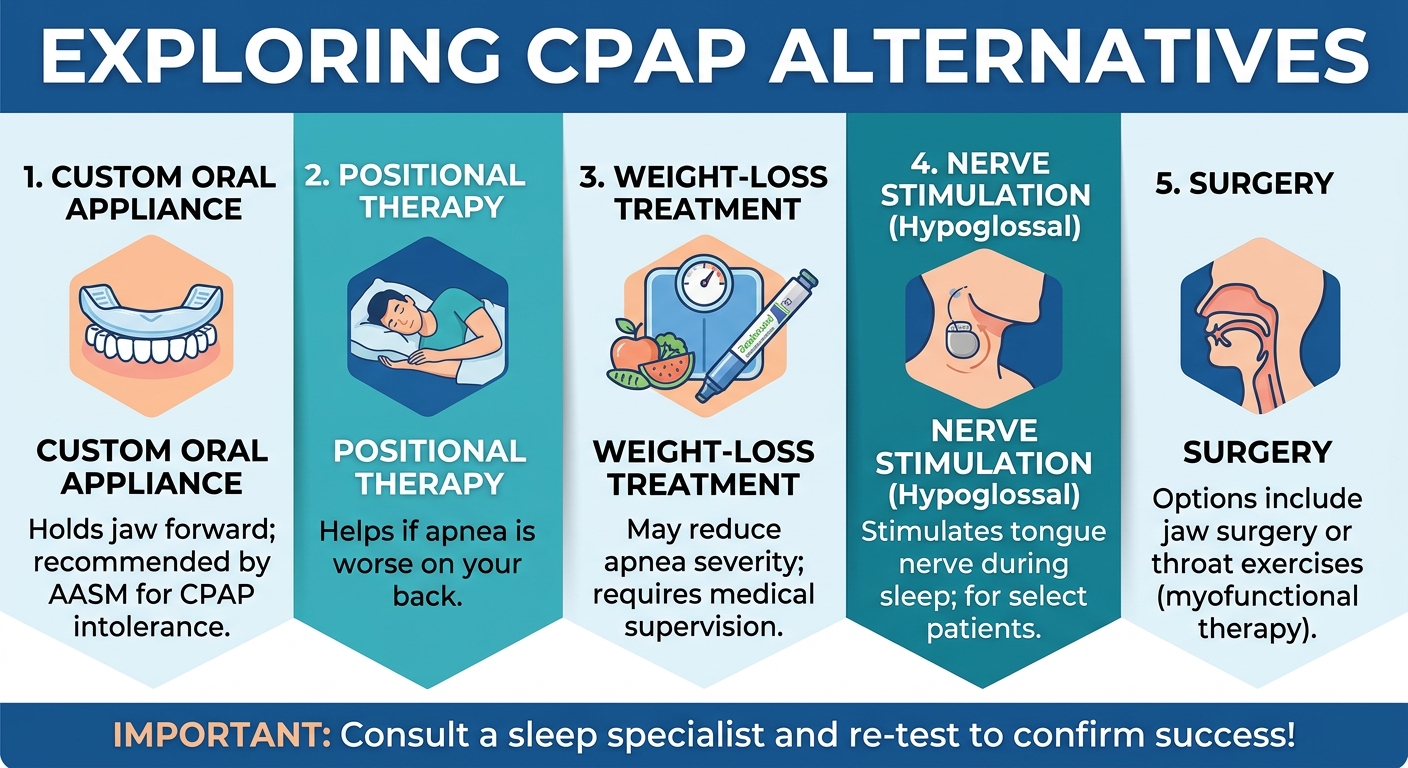
What are the alternatives if you still can’t tolerate CPAP?
CPAP is still the standard first-line treatment, but it is not your only option. The right choice depends on your apnea, anatomy, and weight. Work with a sleep specialist, and re-test to confirm any alternative is working.
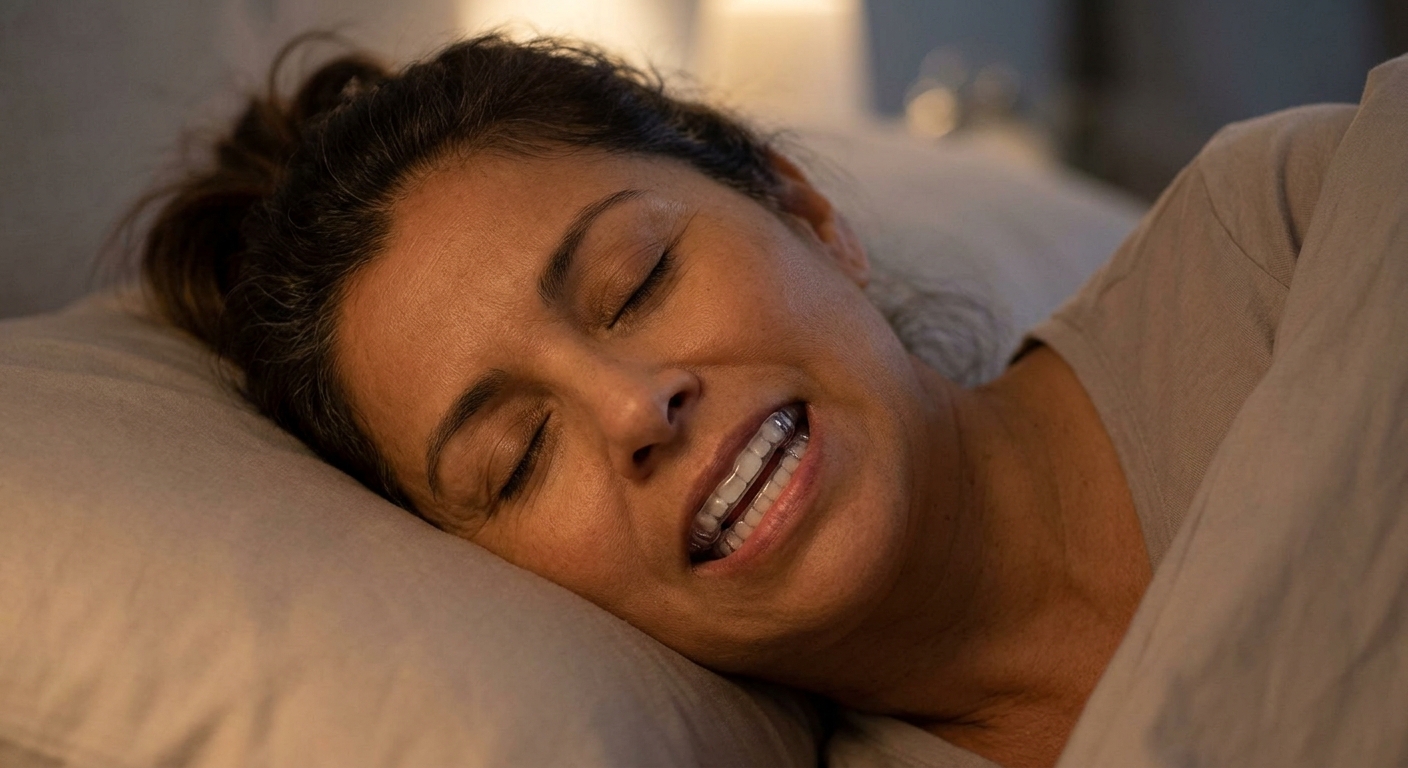
Custom oral appliance. In 2015, the AASM d the American Academy of Dental Sleep Medicine recommended that sleep physicians consider an oral appliance rather than no treatment for adults with OSA who cannot tolerate PAP or prefer an alternative. It is a custom-made mouthpiece that holds the jaw forward. See our guide on mouthguards and snoring.
Positional therapy. If your apnea is mainly worse on your back, sleeping on your side may help. A European guideline supports positional therapy for selected patients, though the certainty of the evidence is very low.
Weight-loss treatment, including Zepbound. In December 2024, the FDA approved tirzepatide (Zepbound) for moderate to severe OSA in adults with obesity, alongside diet and exercise. See our guide to Ozempic and sleep apnea.
Hypoglossal nerve stimulation. An implanted device stimulates the tongue nerve during sleep. Insurers typically limit it to select people with moderate to severe OSA who have failed CPAP, have a BMI under 40, and have no unfavorable airway collapse.
Surgery and other options. The European guideline supports jaw surgery (maxillomandibular osteotomy) in selected cases and myofunctional therapy, a form of tongue and throat exercise, with low-certainty evidence.
Treating nasal blockage. This can make CPAP or an oral appliance easier to tolerate, but on its own it rarely treats apnea.
Mouth taping is not an alternative, and it can be unsafe if your nose is blocked. Read mouth taping for better sleep first.
Is it dangerous to stop using CPAP?
It can be, if nothing replaces it. Sleep apnea that stays untreated keeps interrupting your breathing and your sleep. The AASM recommends that clinicians prescribe CPAP for adults with OSA, and a review of the evidence notes that the health effects of untreated OSA are well described.
So do not stop on your own, and do not wait for your next routine visit. Tell your sleep clinician now and ask for a replacement plan. If you cannot yet use treatment, avoid drowsy driving. For more on apnea itself, read our complete guide to sleep apnea. Curious about testing? See sleep apnea test cost.
What the Research Shows
Low adherence is a long-standing problem. A 2010 review in the Expert Review of Respiratory Medicine put CPAP adherence at 30% to 60%. It found that people who use CPAP every night average about six hours, compared with about three hours for those who skip nights, and that machine-on time overstates actual mask-on use by about 10%. A 2016 review of two decades of data found no significant improvement in adherence over time, even though behavioral interventions added about one hour of use a night on average.
Early problems predict long-term use. A review of nonadherence management notes that the AASM recommends follow-up within the first two weeks, because adherence measured at two weeks can predict long-term nonadherence. It also notes that routine prescription of auto-adjusting or pressure-relief CPAP was not associated with higher adherence than conventional CPAP. A trial of a pressure-relief feature found users averaged 4.5 hours a night versus 3.2 hours, still below the optimal six.
Alternatives have real but uneven evidence. The 2015 AASM and AADSM guideline supports oral appliances for adults who cannot tolerate PAP. A 2021 European Respiratory Society guideline on non-CPAP therapies weighed oral appliances, hypoglossal nerve stimulation, myofunctional therapy, jaw surgery, carbonic anhydrase inhibitors, and positional therapy. Several recommendations rested on low or very low certainty evidence, and it did not favor an oral appliance over CPAP in general. A 2024 expert review noted that oral appliances and nerve stimulation are available but not widely adopted.
Zepbound reduced apnea events in trials, mostly through weight loss. The FDA approval rested on two phase 3 SURMOUNT-OSA trials with 469 and 234 adults. In the first, apnea-hypopnea index fell by 25.3 events per hour on tirzepatide versus 5.3 on placebo at 52 weeks. After a year, 42% reached remission of OSA versus 16% on placebo, and participants lost an average of about 18% of their body weight. The FDA says the improvement is likely related to weight loss. Side effects include nausea, diarrhea, and vomiting. A sleep specialist in an accompanying editorial noted that nearly half of people who start a GLP-1 drug for obesity stop within a year in real-world data, so long-term adherence matters here too.
This article is for education only and is not medical advice. Talk with a qualified clinician about your own sleep, health conditions, and medications.
You have stopped using CPAP, or you use it fewer than four hours on most nights. Talk with your sleep clinician now rather than waiting for a routine visit.
You still snore loudly, gasp or choke at night, wake with headaches, or feel very sleepy by day. Avoid driving when drowsy.
You have chest pain, shortness of breath, or an irregular heartbeat. Seek emergency care.
The mask triggers panic or severe anxiety. A mental health professional can help with graded exposure.
You are thinking about Zepbound, an oral appliance, nerve stimulation, or surgery. Ask a sleep specialist which options fit your apnea, and plan a follow-up sleep test to check that it works.
Frequently Asked Questions
What should I do if I can’t tolerate CPAP?
Do not just stop. Contact your sleep clinician within the first couple of weeks, because early problems predict long-term nonadherence. Ask for a mask refit, humidification, treatment of nasal congestion, a review of your device data, and behavioral support such as gradual desensitization. If CPAP still does not work, ask about an oral appliance, positional therapy, weight-loss treatment, nerve stimulation, or surgery. Untreated sleep apnea carries health risks, so you want a replacement plan before you quit.
How many people can’t tolerate CPAP?
Many. Studies put CPAP adherence at roughly 30% to 60%, meaning a large share of people do not use it enough to get full benefit. Adherence is often defined as using it more than four hours a night on at least 70% of nights. A 2016 review found no meaningful improvement in adherence over 20 years despite better machines and masks. Reasons include comfort, convenience, claustrophobia, and cost, so if you struggle, you are in good company and help exists.
What are the best alternatives to CPAP?
It depends on your apnea, anatomy, and weight. Options include a custom oral appliance (recommended by the AASM and the American Academy of Dental Sleep Medicine for adults who cannot tolerate CPAP), positional therapy if apnea is worst on your back, weight-loss treatment such as tirzepatide (Zepbound) for adults with obesity, hypoglossal nerve stimulation for selected people with moderate to severe apnea, and upper-airway or jaw surgery. CPAP remains the standard first-line treatment, so a sleep doctor should guide the choice.
Can you treat sleep apnea without CPAP by losing weight?
Weight loss can reduce apnea severity, but you should be retested before you stop any treatment. In the SURMOUNT-OSA trials, adults with obesity taking tirzepatide (Zepbound) lost about 18% of body weight, and 42% reached remission of sleep apnea at one year, versus 16% on placebo. The FDA says the improvement is likely related to weight loss. Results vary, and a sleep doctor should confirm with a follow-up sleep test.
How long does it take to get used to CPAP?
There is no set timeline, but the first two weeks matter. Adherence measured as early as two weeks predicts long-term use, which is why the AASM recommends follow-up within that window. Helpful steps include trying different mask styles, using heated humidification, treating nasal congestion, and wearing the mask while awake during the day to get used to it. If you are not improving, ask your sleep team to review your device data and settings rather than waiting.
When to Work With a Sleep Consultant
We do not prescribe or adjust CPAP, and your sleep doctor should lead your apnea treatment. What The Sleep Consultant can do is work alongside them. We look at root causes that make treatment harder, such as insomnia, a stressed nervous system, nasal and airway comfort, hormones, and nutrient gaps, so your nights work better however your apnea is treated.