

Sleep medicine groups sleep disorders into six main categories in the International Classification of Sleep Disorders (ICSD-3-TR): insomnia, sleep-related breathing disorders, central disorders of hypersomnolence, circadian rhythm sleep-wake disorders, parasomnias, and sleep-related movement disorders. Doctors split those into roughly 60 specific diagnoses. Each category has its own symptoms, tests, and specialists. Insomnia is the most common, affecting about 10 percent of people. Sleep apnea falls under breathing disorders. Narcolepsy sits under hypersomnolence. This guide helps you match your symptoms to a category and a next step. It cannot diagnose you. This is educational information, not medical advice.
The six main sleep disorder categories are insomnia, sleep-related breathing disorders like sleep apnea, central disorders of hypersomnolence like narcolepsy, circadian rhythm disorders, parasomnias like sleepwalking, and movement disorders like restless legs. Symptoms overlap, so a doctor or sleep specialist should confirm the diagnosis, especially if you snore, gasp, or feel very sleepy.
The Six Categories at a Glance
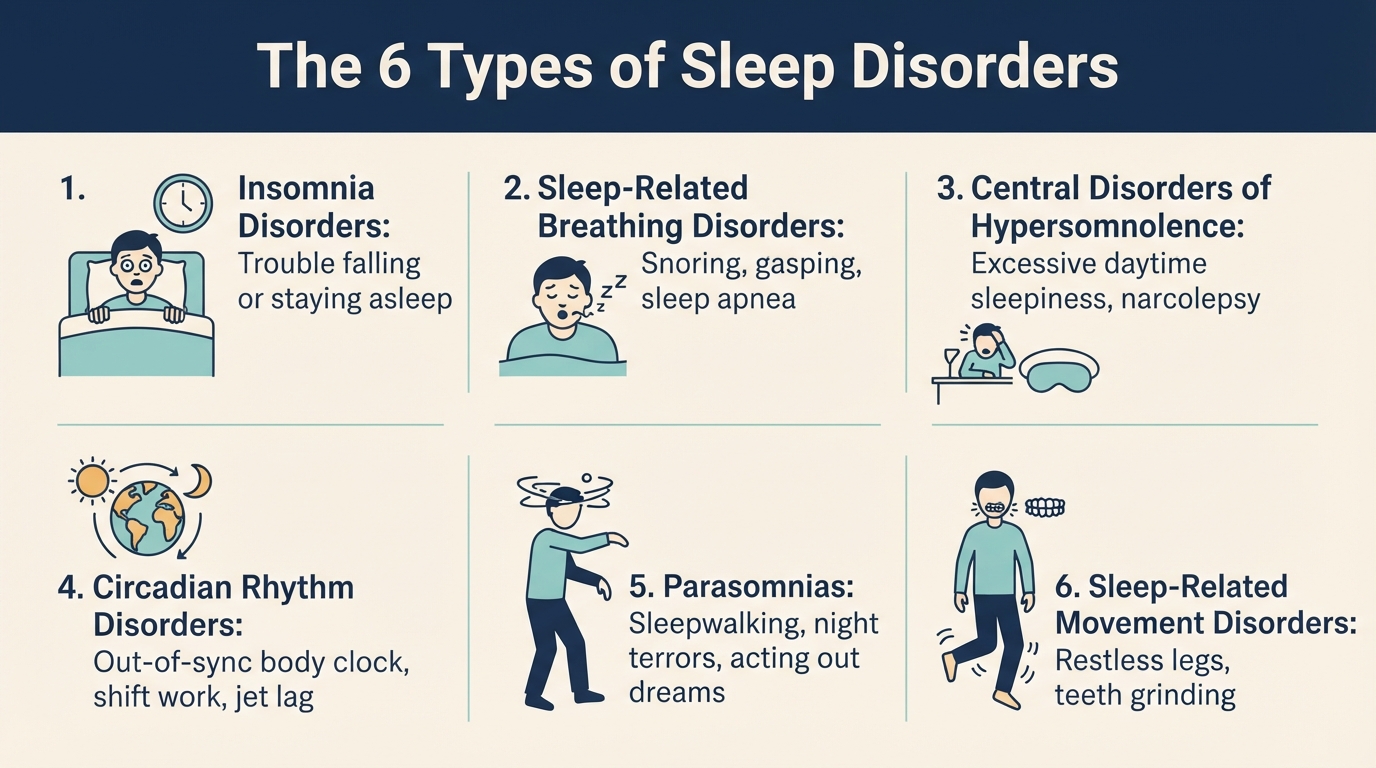
| Category | Core Problem | Typical Signs | First Stop |
|---|---|---|---|
| Insomnia disorders | Trouble falling or staying asleep | Lying awake, early waking, tired the next day | Behavioral sleep specialist (CBT-I) or doctor |
| Sleep-related breathing disorders | Breathing interruptions in sleep | Loud snoring, gasping, morning headaches | Sleep medicine physician |
| Central disorders of hypersomnolence | Excessive sleepiness not due to another disorder | Falling asleep at unplanned times | Sleep medicine physician |
| Circadian rhythm sleep-wake disorders | Body clock out of sync with your schedule | Cannot sleep or wake when you need to | Sleep specialist, plus light and timing changes |
| Parasomnias | Abnormal behavior during sleep | Sleepwalking, acting out dreams, night terrors | Sleep medicine physician |
| Sleep-related movement disorders | Movements or urges that disturb sleep | Leg urges, jerking, teeth grinding | Doctor or sleep specialist |
Approximate prevalence figures from a sleep medicine lecture: insomnia about 10 percent, sleep-related breathing disorders 3 to 7 percent, circadian rhythm disorders 7 to 16 percent, parasomnias 3 to 17 percent, movement disorders 5 to 10 percent, and central disorders of hypersomnolence well under 1 percent. Estimates vary by definition and population, so treat these as rough guides.
1. Insomnia Disorders
Insomnia means trouble falling asleep, staying asleep, or waking too early, even when you have the chance to sleep, plus daytime effects. Under ICSD-3, chronic insomnia disorder requires symptoms for at least three months. DSM-5 adds at least three nights a week.
Who treats it: A behavioral sleep medicine specialist, a sleep physician, or your primary care doctor. CBT-I is the first-line treatment.
Go deeper: What Is Insomnia?, CBT-I, and Insomnia Treatment Options Compared.
2. Sleep-Related Breathing Disorders
This category has four sections: obstructive sleep apnea, central sleep apnea, sleep-related hypoventilation, and sleep-related hypoxemia. Obstructive sleep apnea is the best known. Signs include loud snoring, gasping, witnessed pauses in breathing, morning headaches, and strong daytime sleepiness. Apnea can also happen without loud snoring.
Who treats it: A sleep medicine physician diagnoses it through a home test or lab study. Treatment may include CPAP, an oral appliance, or other options.
Go deeper: Sleep Apnea: The Complete Guide, Insomnia or Sleep Apnea?, Home Sleep Test vs. Sleep Lab Study, and CPAP Alternatives.
3. Central Disorders of Hypersomnolence
These disorders cause excessive daytime sleepiness that other sleep disorders, such as sleep apnea or circadian problems, do not explain. They often involve differences in the brain’s sleep-wake control. Narcolepsy and idiopathic hypersomnia belong here.
Who treats it: A sleep medicine physician, using an overnight sleep study and the Multiple Sleep Latency Test.
Go deeper: Narcolepsy testing and the MSLT.
4. Circadian Rhythm Sleep-Wake Disorders
Here, your body clock does not match your schedule or the day-night cycle. Examples include delayed sleep-wake phase, advanced sleep phase, shift work disorder, jet lag, and irregular patterns. Symptoms include inability to fall asleep until very late, waking too early, or severe sleepiness when your job forces odd hours.
Who treats it: A sleep specialist. Treatment often uses timed light, a fixed schedule, and sometimes timed melatonin.
Go deeper: Circadian Rhythm Insomnia, Shift Work and Sleep, and Early Morning Awakening.
5. Parasomnias
Parasomnias are unusual behaviors, movements, or experiences during sleep. ICSD-3 splits them into disorders of arousal, such as sleepwalking and night terrors, REM-related parasomnias, such as REM sleep behavior disorder and nightmare disorder, and other parasomnias. Sleep paralysis and sleep talking also fall in this family.
Who treats it: A sleep medicine physician. Acting out dreams, especially in midlife or later, needs a medical evaluation.
Go deeper: Sleep Paralysis and Sleep Talking in Adults.
6. Sleep-Related Movement Disorders
These disorders involve movements or urges that disturb sleep. Restless legs syndrome causes an urge to move your legs, often in the evening. Periodic limb movement disorder causes repetitive limb jerks during sleep. Sleep-related bruxism, or teeth grinding, also belongs here.
Who treats it: A doctor or sleep specialist. Checking iron levels is a common first step with restless legs.
Go deeper: Restless Legs Syndrome and Jaw Clenching and Teeth Grinding in Sleep.
How Do You Match Your Symptoms to a Category?

Use this routing guide, then confirm with a professional:
- “I cannot fall asleep or stay asleep.” Likely insomnia. Start with the CBT-I guide.
- “I snore, gasp, or wake with headaches.” Possible sleep apnea. See a doctor for testing.
- “I fall asleep at the wrong times.” Possible hypersomnolence disorder or sleep apnea. See a sleep physician.
- “I cannot sleep or wake when my schedule requires.” Possible circadian disorder. Track your timing in a diary.
- “I act out dreams, sleepwalk, or have night terrors.” Possible parasomnia. See a sleep physician.
- “My legs need to move at night.” Possible restless legs. See a doctor and ask about iron levels.
Many people have more than one disorder at once. Insomnia and sleep apnea overlap often, as our COMISA guideexplains.
Who Should You See First?
Red flags mean see a doctor first: loud snoring or gasping, heavy daytime sleepiness, unusual behavior during sleep, nightly sedative use, or a history of bipolar disorder or seizures. Our who-to-see-first guide lists them, and our specialist guide explains how to verify credentials.
Not sure which category fits you? Book a consultation with The Sleep Consultant. We cannot diagnose sleep disorders, and we will help you organize your symptoms and prepare for a medical visit.
What the Research Shows
Sleep disorders fall into six main categories. The ICSD-3-TR from the American Academy of Sleep Medicine lists insomnia, sleep-related breathing disorders, central disorders of hypersomnolence, circadian rhythm sleep-wake disorders, parasomnias, and sleep-related movement disorders.
The classification contains roughly 60 diagnoses. The six categories break into many specific disorders, which is why symptoms alone rarely settle the diagnosis.
Prevalence differs widely by category. Insomnia affects about 10 percent of people, while central disorders of hypersomnolence affect well under 1 percent.
Disorders often overlap. Insomnia and sleep apnea frequently occur together, and treating only one can leave symptoms behind.
This article is for educational purposes only and is not a substitute for personalized medical advice, diagnosis, or treatment.
If you would like to see how we might be able to help you with this deeper, schedule a free consult here.
Want a Free Starting Point?
Join the free sleep course and community: Join the Sleep Nirvana Club
When to Seek Professional Help

- You snore loudly, gasp, or a partner sees you stop breathing
- You fall asleep at unplanned times or feel very sleepy every day
- You act out dreams, sleepwalk, or injure yourself during sleep
- Your sleep problem has lasted three months or longer
- Poor sleep comes with low mood, anxiety, or thoughts of self-harm
Frequently Asked Questions
What are the main types of sleep disorders?
The ICSD-3-TR lists six: insomnia, sleep-related breathing disorders, central disorders of hypersomnolence, circadian rhythm sleep-wake disorders, parasomnias, and sleep-related movement disorders. Each includes several specific diagnoses.
What is the most common sleep disorder?
Insomnia is the most common, affecting about 10 percent of people in one prevalence summary. Estimates vary with the definition and population.
How do I know which sleep disorder I have?
You cannot tell from symptoms alone, because they overlap. A doctor or sleep specialist uses your history, questionnaires, and sometimes a sleep study to diagnose. Loud snoring, gasping, or heavy sleepiness means see a doctor first.
Can you have more than one sleep disorder?
Yes. Insomnia and sleep apnea overlap often, and restless legs and circadian problems can occur alongside either. Treating only one condition can leave symptoms behind.
Who diagnoses sleep disorders?
A board-certified sleep medicine physician diagnoses most sleep disorders, often with a home test or an overnight lab study. A behavioral sleep specialist treats insomnia with CBT-I.
When to Work With a Sleep Consultant
Sleep disorders come in many forms, and the right first step depends on which one fits your symptoms. If you want help sorting out your pattern and preparing for the right appointment, we can help.


