

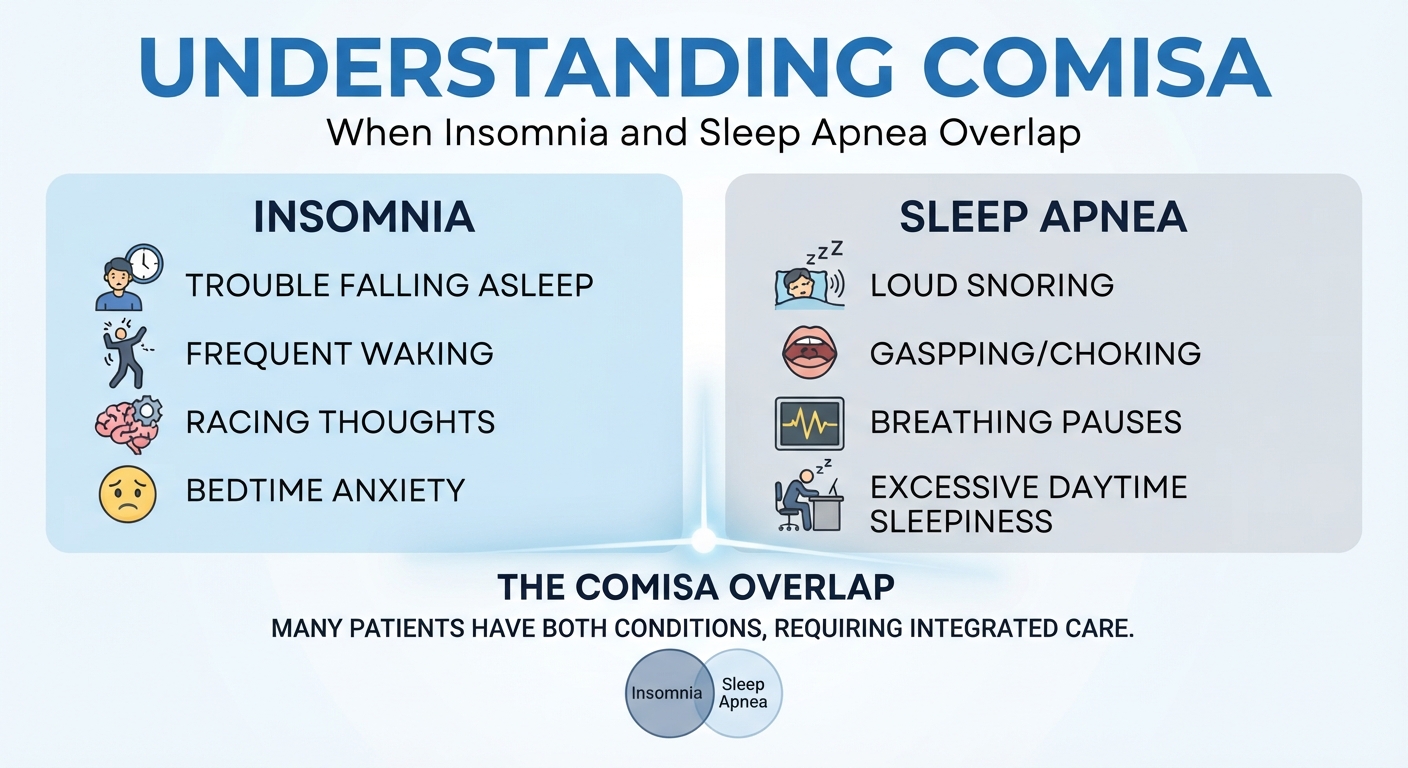
Insomnia and sleep apnea share symptoms, so people often confuse them. Insomnia means trouble falling or staying asleep even though you have the chance to sleep. Sleep apnea means your breathing repeatedly stops or narrows during sleep. Many people have both. In sleep clinics, about 30 to 50 percent of people with sleep apnea report significant insomnia symptoms, and about 30 to 40 percent of people with chronic insomnia turn out to have sleep apnea. Doctors call the combination COMISA. Snoring, gasping, pauses in breathing, and heavy daytime sleepiness point toward apnea and need a medical evaluation. Treating only one condition often leaves symptoms behind. This is educational information, not medical advice.
Short answer (40-60 words): Insomnia is trouble falling or staying asleep. Sleep apnea is repeated breathing pauses during sleep. Snoring, gasping, witnessed pauses, and heavy daytime sleepiness suggest apnea. About 30 to 50 percent of apnea patients also have insomnia. If you suspect apnea, see a doctor for testing before relying on sleep aids.
How Do the Symptoms Compare?
| Feature | More Typical of Insomnia | More Typical of Sleep Apnea |
|---|---|---|
| Main problem | Trouble falling or staying asleep | Breathing interruptions during sleep |
| Night | Lying awake, racing thoughts, clock watching | Snoring, gasping, choking, or a partner seeing pauses |
| Morning | Unrefreshed, often wired but tired | Headache, dry mouth, unrefreshed |
| Daytime | Fatigue, poor focus, irritability | Strong sleepiness, dozing off, poor focus |
| Other clues | Worry about sleep, bedtime anxiety | High blood pressure, waking to urinate, larger neck size |
Many symptoms overlap, including fatigue, poor concentration, mood changes, and frequent waking. That overlap explains why you cannot sort this out from symptoms alone. Apnea can also occur without loud snoring, which our guide on sleep apnea without snoring explains.
A helpful distinction: tired versus sleepy. With insomnia, you often feel exhausted but cannot nap. With apnea, you often fight to stay awake and can doze off easily.
How Common Is It to Have Both?
More common than most people expect. In sleep clinics, 30 to 50 percent of people with sleep apnea report clinically significant insomnia symptoms. Among people who first present with chronic insomnia, 30 to 40 percent meet criteria for sleep apnea when doctors test for it. One analysis found that 35 percent of insomnia patients had an apnea-hypopnea index of 15 or higher, which counts as moderate sleep apnea.
These clinic numbers run higher than the numbers in the general population. Population-based studies put the overlap between 1.7 and 11.4 percent, depending on the region and diagnostic criteria. A pooled analysis of 16 studies found a 30 percent overlap, but the studies differed so much from each other that the number comes with wide uncertainty. Take the exact figures loosely. The clear message holds: the two conditions often travel together.
Why Does It Matter If You Have Both?

People with COMISA tend to do worse than people with either condition alone. Reviews report worse sleep, mental health, physical health, and quality of life. Comorbid insomnia also links to lower adherence to CPAP, the standard apnea treatment. If you treat only the apnea or only the insomnia, symptoms often remain.
Researchers describe a two-way relationship. Apnea fragments sleep and raises arousal, which feeds insomnia. Insomnia, in turn, makes it harder to tolerate a CPAP mask.
What Is the Right Order of Care?

Start with a medical evaluation if you have any apnea warning signs. A doctor can order a sleep test. Our home test vs. lab study guide explains the options, and our apnea screening guide covers short questionnaires such as STOP-Bang, which clinicians pair with the Insomnia Severity Index.
Clinicians also use the logic in reverse. If you have insomnia that keeps waking you through the night, and CBT-I and sleep medication have not worked well, reviewers recommend checking for sleep apnea.
Treatment evidence favors combining approaches:
- CBT-I works in COMISA. A meta-analysis of randomized trials found CBT-I produced major improvements in insomnia severity in people with both conditions, including better CPAP compliance.
- CBT-I plus CPAP beats CPAP alone. A randomized trial found the combination improved both CPAP use and insomnia symptoms more than CPAP alone.
- Insomnia treatment does not get blocked by apnea. A reviewer concluded that having apnea did not impair insomnia treatment, and that both CBT-I and CPAP are necessary.
- Timing can help. For people with mostly trouble falling asleep and mild to moderate apnea, starting CBT-I before or alongside CPAP may improve CPAP acceptance by reducing pre-sleep arousal.
One trial found that people who received CBT-I showed a greater drop in their apnea-hypopnea index after six weeks than a control group. Researchers consider that an unexpected result that needs replication, so treat it as preliminary.
Be careful with sleeping pills if you might have apnea. Some sedatives can affect breathing during sleep, so tell your prescriber about snoring, gasping, or an untreated apnea diagnosis before you start one.
If you are not sure which pattern fits you, book a consultation with The Sleep Consultant. We will help you sort the signs, prepare questions for your doctor, and build a plan that covers both. We do not diagnose apnea or order tests. See who to see first.
What the Research Shows
Overlap is common in clinics. About 30 to 50 percent of sleep clinic patients with apnea report significant insomnia symptoms, and about 30 to 40 percent of insomnia patients have apnea.
Population estimates run lower and vary widely. Population-based studies report 1.7 to 11.4 percent, and pooled analyses show high variation between studies.
Combined care does better. Randomized trials show CBT-I plus CPAP improves CPAP use and insomnia symptoms more than CPAP alone, and CBT-I improves insomnia in people with both conditions.
Comorbid insomnia complicates apnea care. It links to worse sleep, mental health, and quality of life, and to lower CPAP adherence.
This article is for educational purposes only and is not a substitute for personalized medical advice, diagnosis, or treatment.
If you would like to see how we might be able to help you with this deeper, schedule a free consult here.
Want a Free Starting Point?
Join the free sleep course and community: Join the Sleep Nirvana Club
When to Seek Professional Help
- You snore loudly, gasp, choke, or a partner sees you stop breathing
- You feel very sleepy during the day or doze off easily
- You wake with morning headaches or a dry mouth most days
- CBT-I, sleep medication, or good habits have not helped your insomnia
- You have high blood pressure, heart disease, or diabetes along with poor sleep
Frequently Asked Questions
How do I know if I have insomnia or sleep apnea?
You cannot tell from symptoms alone because they overlap. Snoring, gasping, witnessed breathing pauses, morning headaches, and strong daytime sleepiness point toward sleep apnea. Trouble falling or staying asleep despite a good chance to sleep points toward insomnia. A doctor and a sleep test can sort it out.
Can you have insomnia and sleep apnea at the same time?
Yes. About 30 to 50 percent of sleep clinic patients with apnea report significant insomnia symptoms, and about 30 to 40 percent of insomnia patients have apnea. Doctors call the combination COMISA.
Which should I treat first, insomnia or sleep apnea?
Get a medical evaluation first if you have apnea warning signs. Research favors treating both. CBT-I plus CPAP improved CPAP use and insomnia more than CPAP alone, and starting CBT-I before or with CPAP may help people accept the mask.
Does CPAP cure insomnia?
Not always. CPAP can reduce insomnia symptoms for some people, but many still need insomnia treatment. Combined care with CBT-I produces better outcomes for people who have both conditions.
Can sleeping pills make sleep apnea worse?
Some sedatives can affect breathing during sleep. Tell your prescriber about snoring, gasping, or any apnea concern before you start a sleep medication, and ask about safer options.
When to Work With a Sleep Consultant
When insomnia and apnea overlap, the right order of care matters. If you want help sorting the signs and building a plan around your doctor’s findings, we can help.


