

Building a company will mess with your sleep. This is not a personal failing or a character flaw or a sign that you’re doing it wrong. It’s a predictable physiological response to running a business under uncertainty, with personal financial exposure, with multiple competing demands, and with an identity increasingly fused with the company’s outcome. Founders sleep worse than the general population at measurable rates — worse onset, worse maintenance, worse quality. The data is consistent. The question isn’t whether your sleep will suffer; it’s how much and what you do about it.
Most of the entrepreneurial advice you’ve seen on sleep falls into two camps: “you must protect your sleep” from people who don’t actually understand startup conditions, and “sleep is for the weak” from people who eventually crashed and quietly stopped tweeting about it. Neither is useful. The actual question is: given the real constraints of running a startup, how do you protect the cognitive performance and emotional regulation that determines whether your decisions are good? Sleep is the input that determines the output.
This article cuts through both the moralizing and the hustle theater. It covers why founders specifically sleep worse (the physiology, not the symptoms), what the actual performance cost is, and the specific protocols that work within startup constraints rather than pretending those constraints don’t exist.
Why Founders Sleep Worse: The Physiology
Generic stress affects sleep. Founder-specific stress affects sleep through specific mechanisms that compound:
Chronic Cortisol Elevation
Running a startup involves sustained low-grade activation. Decisions matter constantly. Financial exposure is personal. Every Slack message could be the one that requires immediate response. The HPA axis, which evolved to handle acute threats and recover, is being asked to handle low-grade threats continuously. The result is chronic cortisol elevation, particularly in the evening and overnight when cortisol should be at its lowest. This produces the classic founder sleep pattern: difficulty falling asleep despite exhaustion, 3 a.m. wake-ups with racing heart, anxiety that feels physical.
Identity Fusion
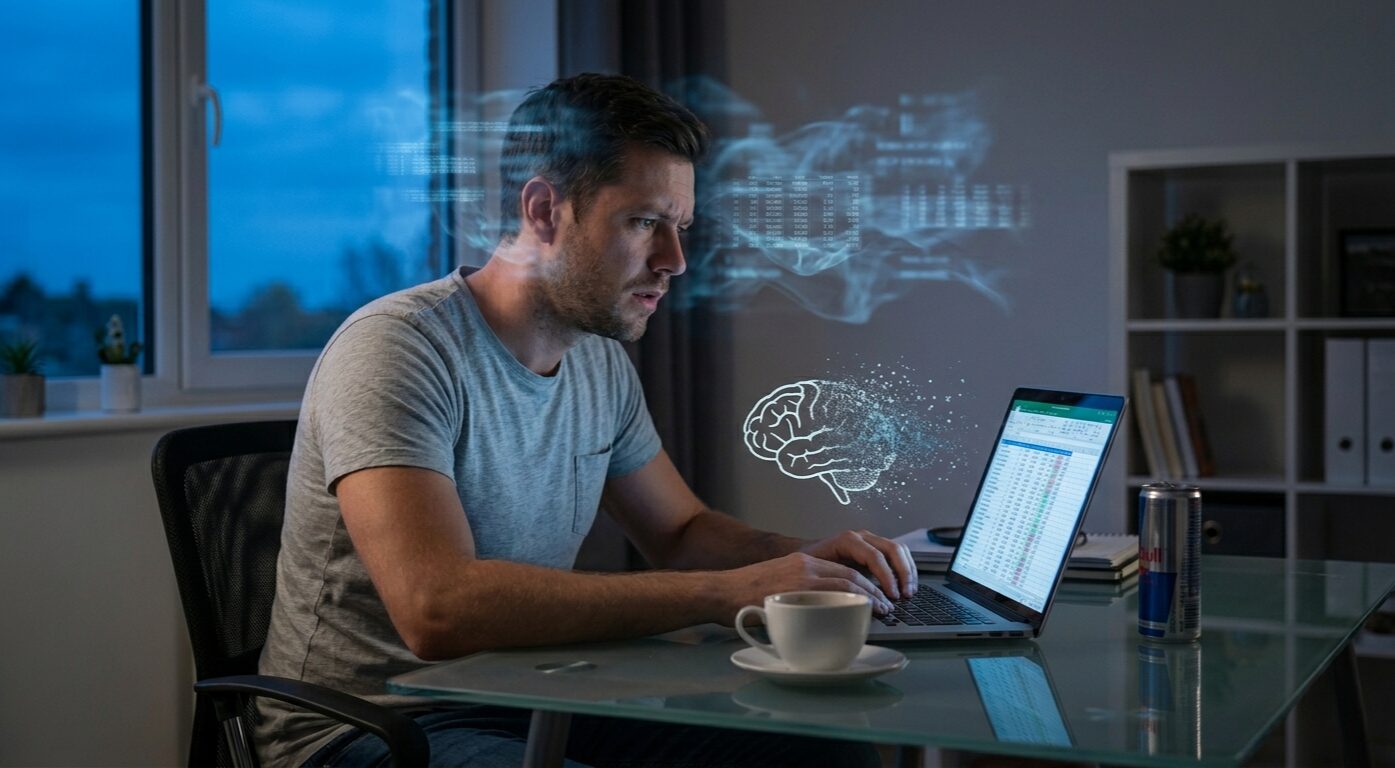
Founders typically have unusually fused identities with their companies. The company’s problems are your problems in a way that’s structurally different from an employee’s relationship to their work. This means you can’t leave it at the office because there’s no office and no leaving. Cognitive load doesn’t down-regulate at 6 p.m. The mind keeps processing strategic problems, customer issues, hiring decisions, and product questions in a way that prevents the cognitive disengagement sleep requires.
Decision Fatigue Compounded
Founders make more decisions per day than most professionals — product decisions, hiring decisions, financial decisions, customer decisions. Each one depletes prefrontal cortex resources. By evening, decision fatigue is severe, which paradoxically makes it harder to make the small decisions that support good sleep (when to stop working, what to eat, whether to have a drink, when to put the phone down). The very cognitive resource needed to protect sleep is the resource most depleted by the day.
The Always-On Information Environment
The phone in the bedroom is the most damaging founder habit. Customer support tickets, Slack pings, investor emails, team questions — the dopamine-driven check behavior keeps the brain in active processing mode well past appropriate sleep onset. Even silent phones in the bedroom create anticipatory activation that delays sleep. This is the single highest-cost behavior most founders engage in nightly.
Caffeine and Stimulant Compensation
Sleep deprivation breeds caffeine dependence. Caffeine dependence extends through the afternoon. Afternoon caffeine impairs the following night’s sleep. The cycle deepens. Founders often consume substantially more caffeine than they realize, much of it during hours that mathematically prevent the next night’s sleep from being adequate.
The Performance Cost (What’s Actually at Stake)
Sleep deprivation specifically impairs the cognitive functions that determine founder success:
Decision quality. Research consistently shows that even moderate sleep restriction (5–6 hours) measurably impairs risk assessment, judgment, and the integration of complex information — the exact decisions founders make daily.
Creative problem-solving. REM sleep is when the brain integrates seemingly unrelated information into novel solutions. Sleep restriction reduces REM. Founders restricting sleep are specifically restricting the cognitive process that produces the creative insights they need.
Emotional regulation. Sleep loss disproportionately affects the prefrontal-amygdala connections that regulate emotional reactivity. Sleep-deprived founders are measurably worse at handling difficult conversations, customer complaints, team conflict, and investor pushback — all common requirements.
Memory consolidation. Information learned today is consolidated into long-term memory during the following night’s sleep. Sleep restriction impairs the learning curve that founders depend on for rapid adaptation.
Pattern recognition. Identifying market signals, customer patterns, and competitive moves requires the kind of holistic processing that occurs during well-rested cognition. Sleep-deprived brains are worse at this in ways the founders don’t recognize until later.
The math is uncomfortable: the time you “save” by sleeping less is paid back with substantial interest in worse decisions, slower learning, harder customer interactions, and the kind of mistakes that take days or weeks to recover from. The trade-off favors sleep, even from a pure productivity standpoint.

Protocols That Actually Work Within Founder Constraints
1. Hard Phone Boundaries
The phone leaves the bedroom. Not on silent. Not face-down. Not across the room. In a different room entirely. Use a basic alarm clock if you need one. This single change produces more sleep quality improvement than nearly any other intervention available to founders. The objection — “what if there’s an emergency” — is almost always overstated. Real emergencies are rare; the cost of phone-driven sleep fragmentation is nightly.
2. Strategic Work Cutoff Time
A hard time after which work stops, with the same discipline you’d apply to a critical meeting. Most founders need a 90-minute buffer between last work activity and intended sleep onset. The brain needs time to disengage from active problem-solving mode. Whatever you don’t finish before cutoff time will be finished tomorrow, when you’re actually capable of doing it well.
3. The Brain-Dump Habit

If your mind races at bedtime with things to remember, that’s a working memory problem you can solve. Keep a notebook by the bed. When something arises, write it down. The act of externalizing the thought removes it from active working memory. This is the simplest, cheapest, most underused founder sleep intervention available.
4. Cortisol Curve Support
Founder cortisol curves are usually disrupted. Restoring the curve requires consistent inputs:
-
Bright outdoor light within 30 minutes of waking (anchors the curve’s upper end)
-
Consistent wake time, weekends included
-
Caffeine cutoff at noon (the half-life makes afternoon caffeine relevant to bedtime)
-
Magnesium glycinate 300–400 mg before bed
-
Adaptogens like ashwagandha (300–600 mg) for sustained cortisol modulation
5. Strategic Napping (Not Crash Napping)
Founders benefit from strategic 15–20 minute naps in early afternoon — long enough for restoration, short enough to avoid sleep inertia and not disrupt night sleep. Set a timer. Lie down. Don’t use this as backup for nighttime sleep deprivation; use it as supplementation for an already-decent night. The 90-minute “sleep cycle” nap works for some people but is harder to integrate into founder schedules.
6. Treat Sleep as a KPI
Most founders track everything except sleep. Track total sleep time, sleep quality, HRV, and morning alertness over months. Correlate with decision quality, mood, energy, and productivity. The data usually surprises founders — the relationship between sleep and performance becomes obvious once you actually measure it. Sleep trackers aren’t perfect, but the trends are useful enough to drive behavior change.
7. Address the Anxiety Directly
Founder anxiety is real and has biological substrates beyond “just manage your stress.” If the anxiety is significant, working with a therapist familiar with founder/executive populations produces better outcomes than trying to manage it alone. CBT-I (Cognitive Behavioral Therapy for Insomnia) has strong evidence for the sleep component specifically.
If you would like to see how we might be able to help you with this deeper, schedule a free consult here.
What the Research Shows
Sleep and decision quality: Studies establish that even one night of sleep restriction (5–6 hours) measurably impairs risk assessment, judgment integration, and the prefrontal cortex functions that determine decision quality.
REM and creativity: Research has documented REM sleep’s specific role in creative problem-solving, with REM-deprived subjects performing worse on tests requiring novel integration of information.
Cortisol and entrepreneurs: Multiple studies on entrepreneur populations show elevated chronic cortisol levels and higher rates of stress-related sleep disruption than matched non-entrepreneur professionals.
Phone use and sleep: Research confirms that smartphone use in the bedroom, even when silent, increases sleep latency, reduces sleep duration, and impairs sleep quality through both behavioral and cognitive mechanisms.
The Pattern That Should Worry You

Many founders accept progressively worse sleep as part of the journey. The pattern usually goes: occasional bad nights become regular bad nights become chronic poor sleep become a baseline that no longer feels notable. At some point, the founder is operating on chronic sleep deprivation that they no longer recognize as deprivation — it just feels normal. This is the failure mode that precedes burnout, founder breakdowns, and the kind of decision-making errors that end companies.
The warning signs:
-
You’ve stopped tracking how much you sleep because you don’t want to know
-
Morning function requires increasing caffeine
-
Decisions that should be easy feel hard
-
Customer or team interactions are getting more emotionally draining than they used to
-
You’re catching yourself making errors you wouldn’t have made a year ago
-
Sleep on weekends has become a desperate compensation rather than restoration
-
Brain fog is becoming chronic
If multiple warning signs apply, the protocol changes from “optimize” to “intervene.” Continuing the trajectory without changes risks the kind of breakdown that creates more business damage than the time investment in fixing sleep would.
This article is educational and not medical advice. Founders experiencing significant sleep disruption that’s affecting business performance often benefit from individualized professional support.
If you would like to see how we might be able to help you with this deeper, schedule a free consult here.
When to Seek Professional Help
Consider professional consultation if:
-
Multiple warning signs from the previous section apply to you
-
Sleep issues have persisted for months despite protocol attempts
-
Anxiety around sleep itself has developed
-
Performance impairment is becoming visible to others
-
Physical symptoms (fatigue, brain fog, mood changes) are accompanying the sleep issues
-
You suspect underlying physiological factors compounding the founder stress picture
Frequently Asked Questions
Why do entrepreneurs sleep worse?
Founder-specific stress affects sleep through multiple compounding mechanisms: chronic cortisol elevation from sustained low-grade activation, identity fusion with the company preventing cognitive disengagement, decision fatigue depleting the prefrontal resources needed for good sleep behaviors, always-on information environments keeping the brain in processing mode, and caffeine compensation that creates self-reinforcing sleep deprivation cycles.
How much sleep do successful founders actually get?
Most sustained founder performance occurs at 7–8 hours per night, despite frequent claims to the contrary. The “I sleep 4 hours and run a company” narrative usually masks chronic sleep deprivation costs (worse decisions, worse pattern recognition, eventual burnout) that the founder isn’t recognizing. The rare genetic short-sleepers exist but represent under 1–3 percent of the population.
Is hustle culture actually harming my performance?
Yes, when it involves chronic sleep restriction. The performance cost is specific and measurable: impaired decision quality, reduced creative problem-solving, worse emotional regulation, slower learning, and worse pattern recognition. These are the exact cognitive functions founders depend on. The time “saved” by sleeping less is paid back with substantial interest in worse outputs and eventual breakdown.
What’s the most important sleep habit for founders?
Phone out of the bedroom — fully out, not silent or face-down. The smartphone in the bedroom is the single highest-cost behavior most founders engage in nightly. The objection “what if there’s an emergency” is almost always overstated. Real emergencies are rare; the nightly cost of phone-driven sleep fragmentation is constant and significant.
How do I unwind from founder brain at bedtime?
Hard work cutoff time with 90-minute buffer before bed. Brain-dump habit (notebook by the bed for racing thoughts). Phone out of bedroom. Magnesium glycinate before bed. Bright morning light to anchor the cortisol curve. Adaptogens like ashwagandha for sustained cortisol modulation. If anxiety is significant, CBT-I or therapy familiar with founder populations is highly effective.
When to Work With a Sleep Consultant
Founder sleep problems have specific causes and specific solutions. The protocols that work acknowledge startup constraints rather than pretending they don’t exist. When self-directed protocols aren’t producing the consistency you need to sustain performance, individualized work with someone who understands both sleep physiology and founder demands typically identifies the specific factors limiting your recovery — and the targeted interventions that protect both your sleep and the company depending on your good decisions.
Riley Jarvis at The Sleep Consultant works with clients to uncover the root biological causes behind chronic sleep issues and build personalised protocols that address every layer — not just the symptoms.


