Dopamine and Insomnia: Can a Neurotransmitter Imbalance Destroy Your Sleep?
You’re lying in bed and your brain is doing that thing again. Not worrying, exactly. More like… seeking. Scrolling through ideas. Rehearsing conversations. Planning tomorrow. Jumping from thought to thought with a restless energy that feels almost pleasurable — except it’s 1 a.m. and you desperately need to sleep.
Or maybe the opposite: you’re flat. Empty. The day drained every drop of motivation, and now at bedtime your body is tired but your brain feels grey and wired simultaneously — too depleted to engage with anything, too unsettled to rest.
Both patterns can trace to the same neurotransmitter: dopamine. And the relationship between dopamine and sleep is far more complex — and far more relevant to chronic insomnia — than most people realise.
What Dopamine Actually Does in the Brain
Dopamine is commonly called the “pleasure chemical,” but that’s a simplification that misses the point. Dopamine is the drive chemical. It governs motivation, reward anticipation, novelty seeking, focus, and motor control. It’s the neurotransmitter that makes you want things — and crucially, it’s supposed to quiet down at night to let sleep-promoting systems take over.
Dopamine operates on a circadian schedule. Levels rise in the morning (helping you wake up and engage with the day) and fall in the evening (allowing the transition to sleep). When this rhythm breaks — when dopamine stays too high at night or drops too low during the day — sleep suffers in specific, predictable patterns that depend on which direction the imbalance leans.
How Dopamine Disrupts Sleep — In Both Directions
High Dopamine at Night: The Wired Brain
Excess dopamine activity at bedtime keeps the brain in seeking mode. You can’t stop thinking, planning, or mentally engaging with ideas. This isn’t anxiety in the traditional sense — it doesn’t carry the dread or worry of anxious rumination. It’s arousal. The brain is activated and oriented toward novelty and reward, which is precisely the opposite of the state needed for sleep.
Common drivers of nighttime dopamine elevation include late-night screen use (social media, gaming, and novel content are potent dopamine triggers), stimulant use (caffeine, ADHD medication, nicotine), high-protein or high-tyrosine meals close to bedtime (tyrosine is the amino acid precursor to dopamine), and chronic stress patterns that dysregulate dopamine clearance and recycling.
The key distinction: this type of insomnia feels energising rather than distressing. You’re not lying awake because you’re upset. You’re lying awake because your brain is having too much fun thinking. The distress comes later, when the alarm goes off and you’ve had four hours of sleep.
Low Dopamine: The Depleted Brain That Can’t Rest
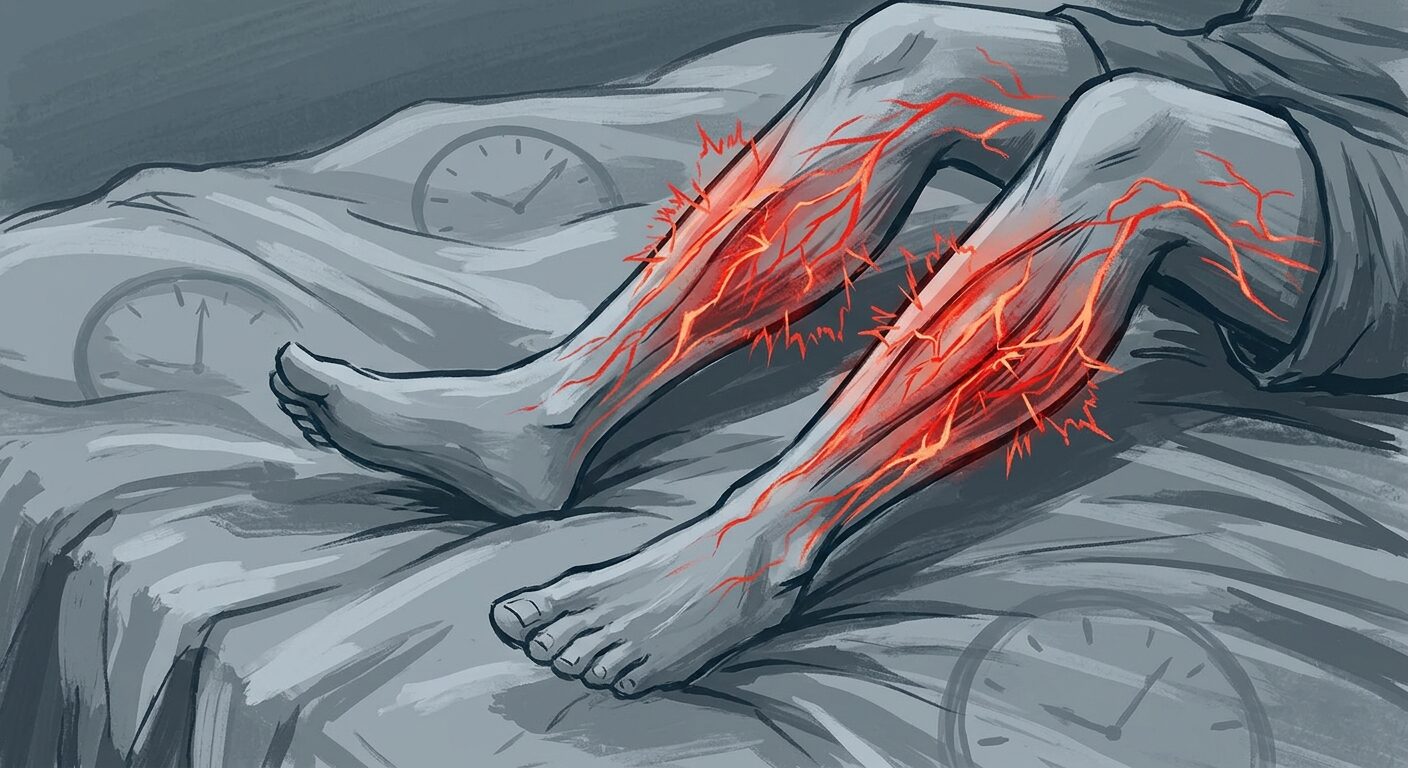
Counterintuitively, low dopamine can also cause insomnia. Dopamine deficiency is associated with restless leg syndrome (one of the most established dopamine-sleep connections in medicine), a flat mood that paradoxically coexists with physical restlessness, and an inability to reach the deep relaxation state needed for sleep onset.
Low dopamine often stems from chronic stress (which depletes precursors), nutrient deficiencies (iron, B6, folate, magnesium, and tyrosine), gut infections that impair neurotransmitter production (roughly half of the body’s dopamine is manufactured in the gut), and sleep deprivation itself — creating a vicious cycle where poor sleep further depletes the very neurotransmitter the brain needs to regulate its own sleep. If you would like to see how we might be able to help you with this deeper, schedule a free consult here.
Symptoms of Dopamine-Related Insomnia
High-Dopamine Pattern
Racing, seeking mind at bedtime — not anxious thoughts, but active, restless, idea-generating thoughts
Difficulty disengaging from stimulating activities in the evening
A second wind of energy after 9 or 10 p.m.
Delayed sleep onset with relatively normal sleep quality once you finally fall asleep
Strong pull toward screens, novelty, or stimulation at night — the brain craves the dopamine hit
Low-Dopamine Pattern
Restless legs or uncomfortable body sensations at bedtime
Physical restlessness paired with mental flatness or apathy
Feeling “too tired to sleep” — exhausted but unable to cross into actual rest
Low motivation and flat mood during the day, poor sleep at night
Cravings for sugar, caffeine, or stimulating activities as unconscious attempts to raise dopamine
The Biological Mechanisms
Dopamine and the Sleep-Wake Switch
The brain’s primary dopamine production centres — the ventral tegmental area (VTA) and substantia nigra — project directly to the hypothalamus, where the sleep-wake switch lives. Dopamine signalling to these areas actively promotes wakefulness. When dopamine activity remains elevated at night, it literally blocks the neural switch that allows sleep-promoting GABA and galanin neurons to take over. You’re tired, but the switch won’t flip.
Dopamine and Melatonin: The Seesaw
Dopamine and melatonin have an inverse relationship governed by the circadian clock. As dopamine falls in the evening, melatonin rises. When dopamine stays elevated — from screen stimulation, stress, or circadian disruption — melatonin release is actively suppressed. This is why late-night screen use is so damaging to sleep: it’s not just the blue light. It’s the dopamine hit from novel, stimulating content that directly suppresses the melatonin signal your brain needs to initiate sleep.
Dopamine, Iron, and Restless Legs
Dopamine synthesis in the brain requires iron as a cofactor for the enzyme tyrosine hydroxylase. When iron stores are low (ferritin below 50–75 ng/mL), dopamine production drops, particularly in the basal ganglia circuits that control motor function. The result is restless leg syndrome — an irresistible urge to move the legs at rest, worst in the evening and at bedtime, and one of the most common causes of sleep-onset insomnia.
This is the most direct, most evidence-based link between dopamine and insomnia. The International Restless Legs Syndrome Study Group recommends maintaining ferritin above 75 ng/mL — a threshold far higher than the 12–15 ng/mL many conventional labs report as the lower end of “normal.” Many people with RLS have ferritin levels that are technically “normal” but functionally insufficient for adequate brain dopamine synthesis.
The Gut-Dopamine Connection
Approximately 50 percent of the body’s dopamine is produced in the gut. Gut infections (H. pylori, parasites, dysbiosis), intestinal inflammation, and microbiome disruption can all impair this production. Research published in Cell confirms that specific gut bacteria produce and modulate dopamine and its precursors, and that microbiome disruption alters central dopamine signalling. This is one more pathway connecting gut health to insomnia — and it runs directly through dopamine.
What the Research Shows
Dopamine and wakefulness: Research in the Journal of Neuroscience demonstrates that activation of VTA dopamine neurons produces sustained wakefulness in animal models, confirming dopamine’s role as a wake-promoting neurotransmitter.
Iron, dopamine, and RLS: Multiple studies confirm that brain iron deficiency impairs striatal dopamine signalling, and that iron supplementation when ferritin is low reduces RLS severity and improves sleep quality.
Screen use and dopamine: Neuroimaging research shows that smartphone and social media use activates dopaminergic reward pathways. Evening use delays sleep onset through combined dopamine elevation and melatonin suppression.
Gut microbiome and dopamine: Research confirms that gut microbiome disruption alters dopamine metabolism, connecting gut infections to the neurotransmitter imbalances that affect sleep regulation.
Root Causes of Dopamine-Sleep Imbalance
Iron deficiency — the most direct and treatable cause of dopamine-related sleep problems, particularly restless legs
Chronic stress — depletes dopamine precursors and dysregulates the dopamine circadian rhythm
Gut infections — parasites, H. pylori, and dysbiosis impair gut-produced dopamine and cause nutrient malabsorption
Nutrient deficiencies — B6, folate, magnesium, and tyrosine are all required for dopamine synthesis
Excessive evening stimulation — screens, gaming, and novelty-seeking behaviours that train the brain to expect dopamine hits at night
Sleep deprivation itself — upregulates dopamine receptors, creating a cycle of daytime hypersensitivity and nighttime dysregulation
How to Rebalance Dopamine for Better Sleep
Protect the Evening Dopamine Decline
Reduce stimulating screen content after 8 p.m. — the content matters more than the light. Social media, news, and novel entertainment trigger dopamine in ways that a static e-reader does not.
Replace novelty-seeking activities with predictable, low-stimulation evening routines that signal “the seeking is over for today”
Avoid high-protein meals close to bedtime — protein is rich in tyrosine, which feeds dopamine production at a time when you need it declining
Address Low Dopamine at the Source
Test ferritin — supplement iron if below 75 ng/mL, especially if restless legs are present. Iron bisglycinate with vitamin C is gentler on the stomach.
Ensure adequate B6 (pyridoxal-5-phosphate), folate, and magnesium — all required for dopamine synthesis
Investigate gut health if dopamine-related symptoms coexist with digestive issues — infections impairing dopamine production need to be identified and treated
This article is educational and not medical advice. Persistent insomnia warrants professional investigation.
When to Seek Professional Help
Seek help if:
Restless legs are a nightly problem and iron status hasn’t been properly tested (ferritin, not just haemoglobin)
Your mind races at bedtime in a way that feels chemical rather than emotional — more “seeking” than worrying
Sleep problems coexist with flat mood, low motivation, or anhedonia during the day
You suspect gut infections or nutrient deficiencies may be driving the imbalance
Reducing evening stimulation and screen time hasn’t made a meaningful difference
Frequently Asked Questions
Can dopamine cause insomnia?
Yes. Both excess dopamine (keeping the brain in an aroused, seeking state at bedtime) and insufficient dopamine (causing restless legs and an inability to reach deep relaxation) can cause insomnia. The pattern depends on whether dopamine is too high at night, too low overall, or both.
Does dopamine keep you awake at night?
Yes. Dopamine is a wake-promoting neurotransmitter. When activity remains elevated in the evening from screen use, stimulants, stress, or circadian disruption, it suppresses melatonin and blocks the neural sleep-wake switch, making sleep onset difficult.
Can low dopamine cause insomnia?
Yes. Low dopamine is the primary driver of restless leg syndrome, one of the most common causes of sleep-onset insomnia. Low dopamine also creates a flat-but-restless state. Iron deficiency is the most common treatable cause.
How do you fix dopamine-related insomnia?
Address the root cause. Test ferritin and supplement iron if low. Reduce evening stimulation. Support synthesis with adequate B6, folate, magnesium. Investigate gut health if production is impaired. Use morning light and exercise to anchor the dopamine circadian rhythm.
Is there a connection between gut health and dopamine?
Yes. Approximately 50 percent of the body’s dopamine is produced in the gut. Infections, dysbiosis, and inflammation can impair this production, contributing to the low-dopamine patterns associated with restless legs and poor sleep.
When to Work With a Sleep Consultant
If your insomnia feels like a brain chemistry problem — a mind that won’t stop seeking, or a body that can’t stop moving — dopamine is worth investigating. And because dopamine production is tightly linked to iron status, gut health, and nutrient balance, the investigation often leads to the same root causes that underlie many chronic sleep issues.
Riley Jarvis at The Sleep Consultant works with clients to uncover the root biological causes behind chronic sleep issues and build personalised protocols that address every layer — not just the symptoms.